


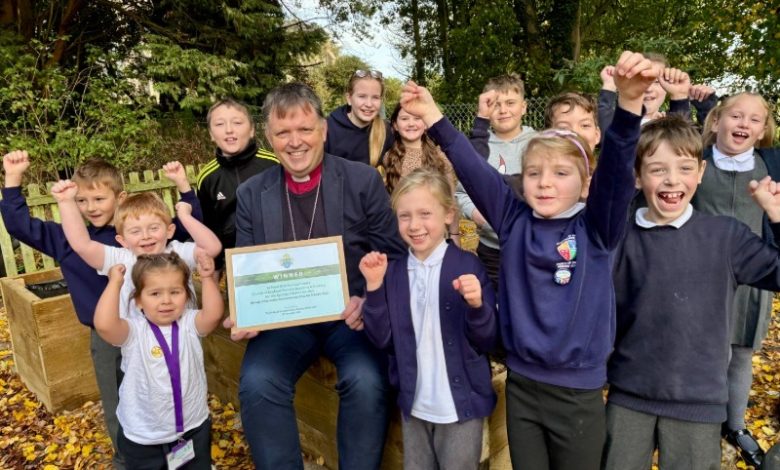
Bishop of Norwich Launches Second Annual Environment Prize for Church of England Primary Schools
In a heartening initiative to connect children with the natural world, the Bishop of Norwich has announced the second year of his Environment Prize for Schools. Open to all Church of England primary schools in the Norwich diocese, this award celebrates student-led environmental projects with a generous £1,000 prize to further develop the winning school’s green initiative. Bishop Graham Usher, who serves as the Church of England’s lead bishop on environmental matters, is particularly eager to see projects that demonstrate significant pupil involvement—whether they’re established programs or newly launched endeavors.
“This award is about giving children the chance to experience the joy and solace of God’s wonderful creation, helping them to love it, understand it, care for it and become a voice for it,” Bishop Graham explained. His vision reflects a deeper understanding of how formative these early connections with nature can be for young people. The competition welcomes a wide variety of environmental initiatives, including nature gardens, eco-clubs, wildlife groups, vegetable plots, and recycling teams. The emphasis remains firmly on student participation and leadership, with the Bishop looking for evidence of how children are involved in both designing and implementing their environmental projects.
Last year’s inaugural prize was awarded to St Peter and St Paul Carbrooke Church of England Primary Academy and Nursery for their remarkable nature garden. What made their project stand out was the comprehensive involvement of students from across all age groups. Children from the school council, ranging from four to eleven years old, took ownership of the project from its earliest stages. They participated in everything from clearing the site and painting fences to selecting plants and providing ongoing care for the garden. The project exemplified exactly what the Bishop hopes to encourage: meaningful engagement with the environment that teaches children to become stewards of the natural world.
Reception class teacher Mrs. Keely Cunningham, who led the Carbrooke project, encouraged other schools to submit applications, noting that the process was straightforward and efficient. “It was a very short and quick application to complete,” she remarked. “The children have loved working to help develop the spiritual garden and are looking forward to it being finished.” This testimony highlights how the award not only provides financial support but also creates a sense of accomplishment and ongoing purpose for the students involved. The Carbrooke students drew inspiration from Norwich Cathedral, incorporating elements like a labyrinth into their design, demonstrating how environmental projects can also connect with cultural and spiritual dimensions of learning.
Bishop Graham’s visit to present the award to Carbrooke school offered him firsthand insight into the impact of such initiatives. “What a wonderful garden!” he exclaimed. “The children have designed it, helped create it, and as it takes shape they are passionate champions of their new space.” His enthusiasm underscores the transformative potential of these projects—not just in creating beautiful green spaces, but in developing children’s sense of agency and environmental responsibility. The Bishop expressed particular delight in how the students had incorporated architectural elements from Norwich Cathedral, creating a meaningful connection between their local heritage and their environmental work.
The momentum continues at Carbrooke, where students are now planning expansions to their award-winning garden, including a barefoot path, additional plantings, and a covered seating area. These ongoing developments demonstrate how the Bishop’s prize serves as a catalyst for sustained environmental engagement rather than a one-time achievement. Schools interested in following Carbrooke’s example and competing for the 2026 prize have until Monday, June 1st to complete the online application form. The simplicity of the application process makes this opportunity accessible to schools across the diocese, potentially inspiring a new generation of environmentally conscious young people who understand their role in protecting and celebrating the natural world around them.






Your writing style makes complex ideas so easy to digest.
This is one of the best explanations I’ve read on this topic.
What I really liked is how easy this was to follow. Even for someone who’s not super tech-savvy, it made perfect sense.