


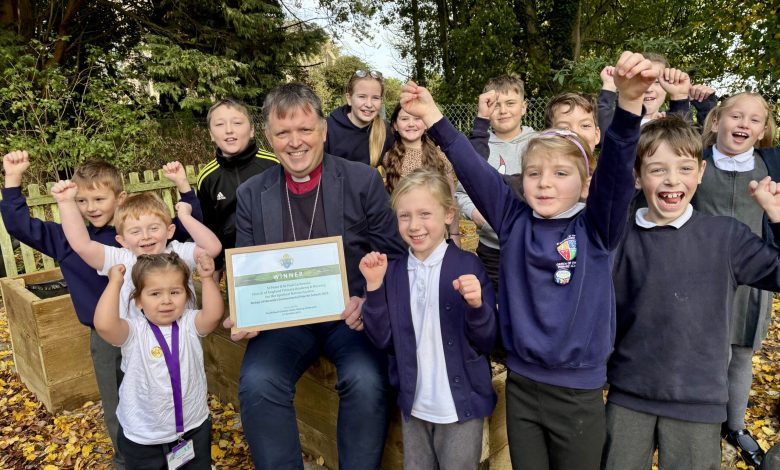
Bishop of Norwich’s Environment Prize for Schools: Cultivating Young Environmental Stewards
Encouraging Young Minds to Connect with Nature
The Bishop of Norwich, Graham Usher, has launched the second year of his Environment Prize for Schools, offering Church of England primary schools across Norwich diocese a chance to win £1,000 for their environmental initiatives. This prize celebrates the creativity and dedication of young people working to protect and nurture the natural world around them. Bishop Graham, who serves as the Church of England’s lead bishop on environmental matters, believes deeply in connecting children with nature at an early age. “This award is about giving children the chance to experience the joy and solace of God’s wonderful creation, helping them to love it, understand it, care for it and become a voice for it,” he explains. The competition is designed to be accessible, with a simple online application form that takes minimal time to complete, ensuring that even the busiest schools can participate by the June 1 deadline.
Last Year’s Winning Project: A Garden of Learning and Wonder
The inaugural prize in 2025 was awarded to St Peter and St Paul Carbrooke Church of England Primary Academy and Nursery, whose students created an inspiring nature garden. What made this project stand out was the genuine involvement of children from across all age groups, from four to eleven years old. The school council played a central role in the decision-making process, with students actively participating in every aspect of the garden’s development—from the initial clearing of the site to painting fences and selecting appropriate plants. When Bishop Graham visited Carbrooke to present the prize, he was visibly moved by what he saw: “What a wonderful garden! The children have designed it, helped create it, and as it takes shape they are passionate champions of their new space.” He particularly noted their creative incorporation of a labyrinth inspired by Norwich Cathedral, demonstrating how the students connected their local cultural heritage with their environmental project.
Continuing Growth and Development
The Carbrooke school community isn’t resting on their laurels after winning last year’s prize. Instead, they’re using the momentum and funding to expand their vision. The children have already developed plans to add a barefoot sensory path through the garden and create a covered seating area where students can sit, observe, and learn in all weather conditions. This ongoing development exemplifies the sustainable nature of the best environmental projects—they don’t simply conclude after initial construction but continue to evolve as living spaces that grow alongside the children who tend them. Reception class teacher Keely Cunningham, who spearheaded the project, encourages other schools to participate, emphasizing how straightforward the application process is: “It was a very short and quick application to complete. The children have loved working to help develop the spiritual garden and are looking forward to it being finished.”
What Makes a Winning Environmental Project?
Bishop Graham is looking for projects that place children at the center of both planning and implementation. The prize celebrates initiatives that give young people agency and ownership in their environmental stewardship. Successful projects might be well-established or just beginning—both are welcome to apply. The key factor is meaningful student involvement across all stages of the process. The Bishop’s prize acknowledges that environmental education takes many forms, from hands-on gardening to scientific observation of wildlife, from waste reduction campaigns to climate change initiatives. This inclusivity ensures that schools with different resources, spaces, and focuses can all find ways to participate. Whether your school has a sprawling outdoor space suitable for a nature reserve or simply a corner that could become a container garden, the opportunities to engage children with nature are boundless.
How the Prize Money Can Make a Difference
The £1,000 prize offers substantial support for environmental initiatives that often operate on limited budgets. Schools can use these funds in numerous ways: purchasing plants, seeds, and gardening tools; acquiring wildlife observation equipment like binoculars or identification guides; installing rainwater collection systems; creating composting facilities; or funding educational visits to nature reserves or conservation centers. For some schools, the prize might help launch a new eco-club or environmental committee; for others, it could allow expansion of existing projects that have reached capacity. The flexibility of the funding recognizes that each school community has unique needs and aspirations. Beyond the financial support, winning the Bishop’s Environment Prize brings recognition and affirmation to the efforts of children and teachers, often inspiring continued engagement with environmental issues long after the prize ceremony.
Joining a Growing Movement of Young Environmental Stewards
By entering the Bishop of Norwich Environment Prize for Schools, educational communities become part of a wider movement connecting faith, education, and environmental stewardship. The competition reflects the Church of England’s increasing focus on creation care as a fundamental aspect of Christian faith and practice. For participating schools, the process of applying can itself be valuable, offering an opportunity to reflect on existing environmental initiatives and imagine new possibilities. The June 1 deadline provides ample time for schools to involve children in composing their applications, perhaps documenting their environmental journey through photographs, drawings, or written accounts. Whether or not they win the prize, all participating schools contribute to a growing network of communities teaching the next generation to treasure and protect the natural world. As Bishop Graham’s initiative enters its second year, it continues to champion the principle that children who learn to love nature today will become the environmental guardians of tomorrow.







Your content always adds value to my day.