Gerry Harrison dead at 89: Legendary former sports commentator who covered SEVEN World Cups passes away

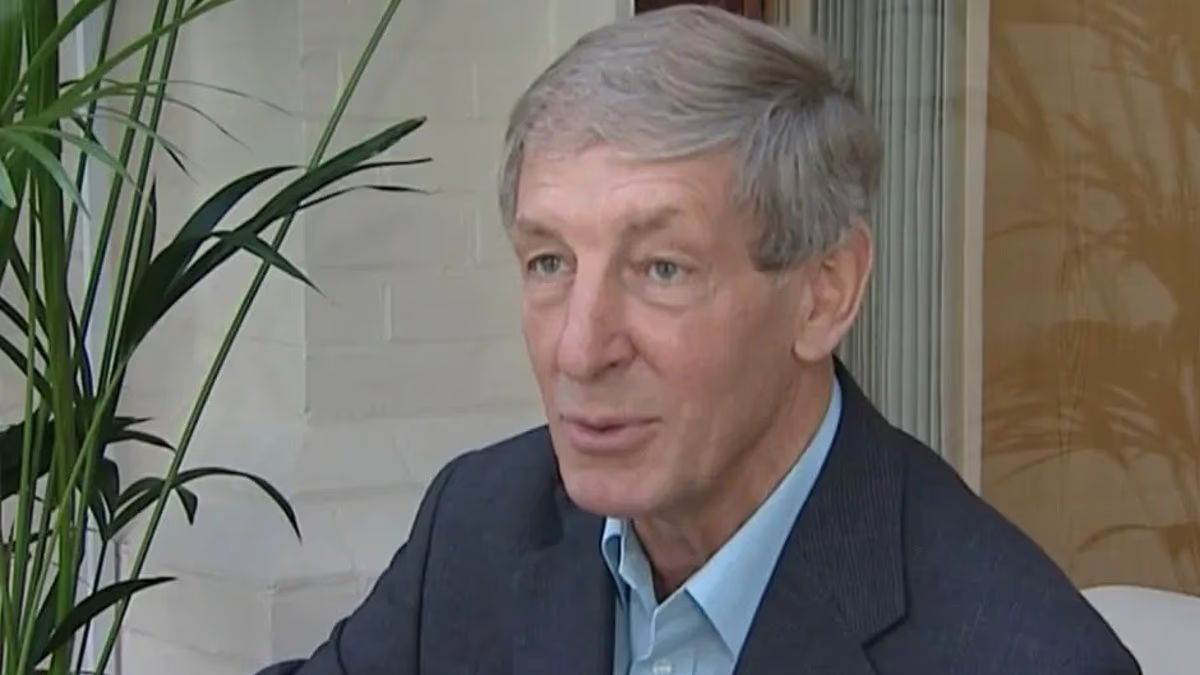
Remembering Gerry Harrison: A Voice That Defined an Era in Sports Broadcasting
In a poignant announcement that has reverberated through the British sports media landscape, legendary sports commentator Gerry Harrison has passed away at the age of 89. For three decades spanning the 1970s through the 1990s, Harrison’s distinctive voice and insightful commentary became a fixture in countless homes across the United Kingdom. While his most enduring legacy remains his tenure at Anglia TV’s Match of the Week, his contributions to ITV Sport and the broader evolution of sports broadcasting left an indelible mark that continues to influence how we experience televised sports today. His passing marks the end of an era in British sports commentary, closing a chapter on a golden age of broadcasting that helped shape the modern relationship between sports and television.
Harrison’s career was most prominently defined by his coverage of East Anglian football, where he chronicled the golden era of Ipswich Town under the management of Sir Bobby Robson. His voice provided the soundtrack to some of the club’s most historic achievements, including their FA Cup triumph in 1978 and their remarkable UEFA Cup victory in 1981. His comprehensive regional coverage extended beyond Ipswich to include their fierce rivals Norwich City, as well as smaller clubs including Cambridge United, Luton Town, Peterborough United, Northampton Town, Colchester United, and Southend United. This dedication to covering football across all levels demonstrated Harrison’s genuine passion for the game and his commitment to serving viewers beyond just the glamour of top-tier matches. His intimate knowledge of these teams and their communities fostered a deep connection with regional audiences who appreciated his authentic understanding of local sporting cultures.
Harrison’s expertise and influence extended well beyond the boundaries of East Anglia and domestic football. He reported on an astonishing seven FIFA World Cups, beginning with the iconic 1970 tournament in Mexico – widely considered one of the greatest World Cups in history. His international coverage provided British viewers with a window to global football at a time when foreign matches were far less accessible than today. Perhaps less known but equally significant was Harrison’s contribution to motorsport coverage through his program “Wheels,” which helped establish a television presence for sports that previously received limited airtime on terrestrial channels. This pioneering work in diversifying sports coverage demonstrated Harrison’s broader vision for sports broadcasting and his understanding that passionate audiences existed for a wide variety of competitive endeavors beyond the dominant football narrative.
After departing Anglia in the early 1990s, Harrison played a pivotal role in shaping the future of football broadcasting in Britain. He collaborated with production company IMG as they began their involvement with football coverage, helping to develop the foundational framework for how the Premier League would be presented to television audiences. This behind-the-scenes contribution to structuring Premier League broadcasts represents perhaps his most enduring legacy, as the presentation models he helped establish continue to influence how the world’s most popular football league is covered globally. This transition from on-air talent to production innovator showcased Harrison’s versatility and deep understanding of the medium, proving that his expertise extended far beyond his familiar voice and on-camera presence.
Tributes from colleagues and peers have highlighted not only Harrison’s professional excellence but also his personal qualities and mentorship. Tony Jones, a former colleague at ITV News Anglia who received his first television opportunity from Harrison in 1982, described him as an “inspirational figure” who “set the highest possible standards.” Jones specifically praised Harrison’s exceptional writing ability, noting how he crafted scripts that perfectly complemented visual storytelling in ways that elevated the entire production. Similarly, renowned commentator Ian Darke remembered Harrison as “terrific,” “affable,” and “professional,” underscoring the universal respect he commanded within the industry. Former colleague Stuart Jarrold offered perhaps the most revealing insight into Harrison’s character and work ethic, stating: “He was so diligent in his preparation that he made commentating sound easy. It isn’t, but he did all his research and he was a thoroughly lovely, lovely chap.” This combination of meticulous preparation, natural talent, and genuine kindness appears to have defined Harrison both professionally and personally.
As the sports broadcasting community mourns Harrison’s passing, ITV Sport has announced plans to honor his memory during Wednesday’s Carabao Cup broadcast between Grimsby Town and Manchester United – a fitting tribute that connects his legacy to the ongoing evolution of football coverage. Harrison’s career spanned an era of tremendous change in sports broadcasting, from the relatively simple productions of the 1970s to the sophisticated multi-camera, analysis-driven presentations that began emerging in the 1990s. Throughout these transformations, his commitment to quality, preparation, and authentic storytelling remained constant. The outpouring of affection following his death reveals how deeply his work resonated with viewers and colleagues alike, and how his influence continues to permeate sports broadcasting today. In a media landscape increasingly dominated by hyperbole and manufactured drama, Harrison’s legacy serves as a reminder of the power of measured expertise, genuine enthusiasm, and thoughtful communication in connecting audiences to the sports they love.