


A Deeper Journey: The Bishop of Norwich’s Certificate in Christian Learning
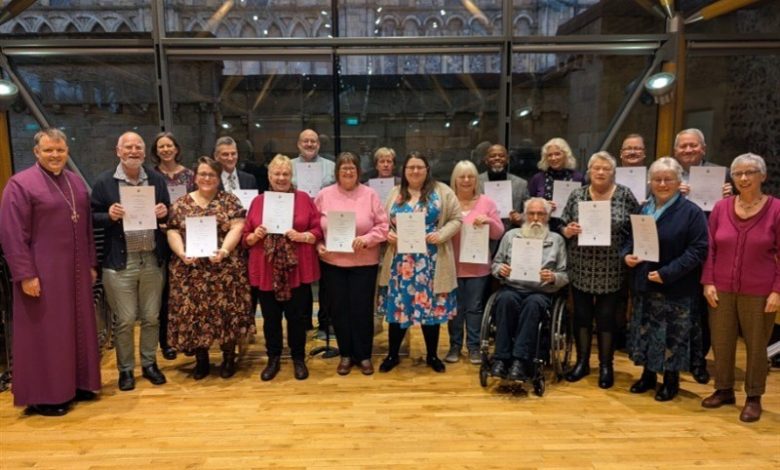
In a world often filled with spiritual uncertainty and a hunger for deeper understanding, a new initiative has emerged within the Diocese of Norwich that offers individuals the opportunity to explore the Christian faith in a supportive and enriching environment. The Bishop of Norwich’s Certificate in Christian Learning, launched in January 2025, has successfully guided its first cohort of participants through a comprehensive exploration of Christianity. This innovative program combines in-person and online learning experiences, creating a flexible pathway for people at various stages of their spiritual journey. The recently completed program has not only equipped participants with theological knowledge but has fostered meaningful connections and personal growth among its diverse group of learners. As the first graduates received their certificates from Bishop Graham Usher on November 29, 2025, their enthusiastic testimonials speak to the program’s transformative impact on both their intellectual understanding and spiritual development.
The certificate program is thoughtfully structured into five distinct units, each offering a unique perspective on the Christian tradition. What sets this course apart is its expert leadership team, including the Reverend Richard Lamey (Director of Mission and Ministry), Reverend Lucy Dallas (Diocesan Director of Ordinands and Initial Ministerial Education), the Very Reverend Dr. Andrew Braddock (Dean of Norwich), and Dr. Jane McLarty (a Licensed Lay Minister within the Diocese). This blend of academic expertise and pastoral experience ensures that participants receive not only scholarly instruction but also practical wisdom for their faith journey. The curriculum appears designed to balance historical context, theological concepts, and contemporary application—creating a holistic approach to Christian education. Participants have the flexibility to engage with individual modules based on personal interest or complete the entire program for certification, making it accessible to casual learners and dedicated students alike.
The testimonials from the inaugural cohort reveal the program’s profound impact on their spiritual lives. Roz Trudgett described it as “an excellent, well-structured, thought-provoking course, ideal for everyone, no matter where you are on your faith journey,” highlighting how the program effectively reaches people at different stages of belief and understanding. David Robinson emphasized that the certificate “goes far beyond an intellectual appreciation of our rich Christian Learning” by breathing “new life into our journey together with fellow pilgrims,” suggesting that the course succeeds in balancing intellectual rigor with spiritual formation. Roy Burrows noted how the program provided “a deeper understanding of our Christian faith and the historical context of the Old and New Testaments,” while particularly valuing “the fellowship of my fellow attendees, sharing our different perspectives and faith, and learning from each other.” Jane Ward added that the course “has something for everyone, whether you’re new to faith or have been a Christian all your life,” and emphasized the “lifelong friendships” formed along the way.
What emerges clearly from participant feedback is the program’s dual strength in building both knowledge and community. While many educational initiatives focus primarily on information transfer, the Bishop’s Certificate appears to create a learning environment where relationships flourish alongside intellectual growth. This community-centered approach reflects a deeply Christian understanding of formation, where faith develops not in isolation but in relationship with others. The course seemingly avoids the common pitfall of making theological education either too academic (disconnected from lived experience) or too simplistic (lacking intellectual substance). Instead, it strikes a balance that participants clearly appreciate, regardless of their previous experience with Christianity or formal education. The “thought-provoking” nature mentioned by several participants suggests that the program encourages critical thinking and personal reflection rather than mere passive reception of information.
Bishop Graham Usher’s involvement demonstrates institutional support for this educational initiative. In presenting the certificates, he expressed delight in the participants’ accomplishments and gratitude to the teaching faculty, particularly Dr. Jane McLarty for her organizational efforts. His hope that “more people will take part and discover the riches in going deeper into our Christian discipleship” reflects a pastoral vision that values informed faith and lifelong learning. This episcopal endorsement positions the program not as a peripheral activity but as central to the diocese’s mission of nurturing thoughtful Christian disciples. The Bishop’s comments suggest an understanding that in today’s complex world, Christians benefit from educational opportunities that help them engage more deeply with their tradition’s resources—its scriptures, history, theology, and practices—while remaining open to questions and exploration.
As the Diocese of Norwich prepares to welcome a new cohort beginning September 26, 2026, the program stands as a promising model for contemporary Christian formation. In an era when many religious institutions struggle to offer meaningful adult education that attracts diverse participants, the Bishop’s Certificate appears to have found a successful approach through its combination of academic rigor, flexible delivery, expert instruction, and community building. The enthusiastic recommendations from the first graduates suggest that the program fills an important need for accessible yet substantive Christian education. For those interested in Christianity—whether newcomers seeking to understand the faith or longtime believers hoping to deepen their knowledge and practice—the Bishop’s Certificate in Christian Learning offers a pathway to greater understanding and fellowship. As participant Jane Ward observed, the course not only provides intellectual stimulation but fosters “lifelong friendships along the way”—perhaps the most enduring testament to its value.





**mitolyn official**
Mitolyn is a carefully developed, plant-based formula created to help support metabolic efficiency and encourage healthy, lasting weight management.