


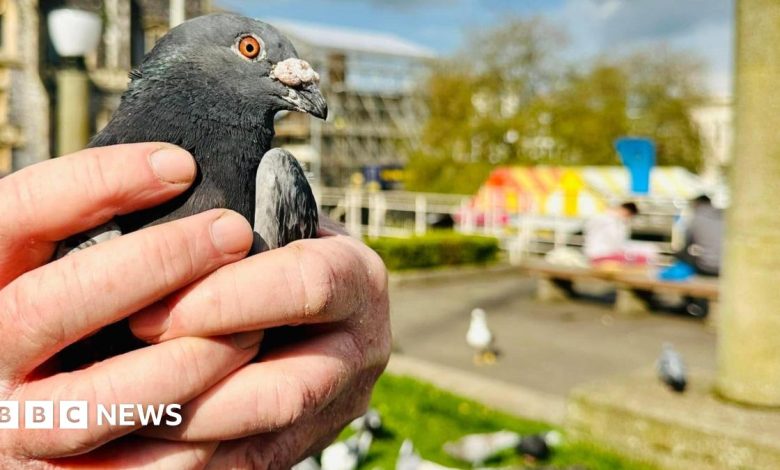
The Remarkable Resilience of Urban Pigeons
Urban pigeons, often misunderstood and maligned, represent one of nature’s most successful adaptations to human civilization. While many people express concerns about disease transmission from these ubiquitous birds, experts note that this risk is comparable to that of all wild animals. Notably, feral pigeons demonstrate remarkable resistance to avian influenza, which is typically the primary health concern associated with wild bird interactions. This resilience is just one aspect of these birds’ fascinating biology that often goes unappreciated by city dwellers who encounter them daily.
The historical significance of pigeons extends far beyond their current urban presence. These birds played crucial roles during wartime as message carriers, saving countless lives through their reliability and homing instincts. Even Charles Darwin held them in high regard, dedicating an entire chapter in his groundbreaking “On the Origin of Species” to exploring the diversity of domestic pigeon breeds and their differences from wild rock doves. Darwin’s fascination with pigeons ran so deep that he once wrote to a friend that viewing someone’s pigeon collection was “the greatest treat, in my opinion, which can be offered.” This scientific interest highlights how pigeons have been valued companions and subjects of study long before becoming fixtures of urban landscapes.
Perhaps one of the most fascinating biological features of pigeons is their ability to produce “milk” – a characteristic shared by very few bird species. Both male and female pigeons secrete this nutritious substance from a specialized pouch near their stomach, which they then feed to their young directly from their beaks. This remarkable adaptation allows pigeons to convert the varied and often nutritionally poor urban food sources they consume into highly nutritious sustenance for their offspring. This biological innovation represents a key factor in their successful adaptation to city environments, where conventional food sources for wild birds might be scarce or unsuitable.
The pigeon’s remarkable urban adaptation has resulted in substantial populations across the United Kingdom, though they remain less numerous than their woodland cousins. While exact figures are difficult to determine, experts estimate hundreds of thousands of feral pigeons inhabit UK cities, compared to the millions of wood pigeons found throughout the country. Their success in human-dominated landscapes represents an extraordinary evolutionary achievement – a wild species that has effectively colonized the most artificial and challenging environments humans have created. This adaptability speaks to the pigeon’s intelligence, flexibility, and resilience in the face of rapidly changing conditions.
Despite their successful adaptation, urban pigeons remain entirely dependent on human civilization for their survival. They rely on architectural features that mimic the cliff faces of their wild ancestors for nesting sites, and urban food sources – whether intentionally provided or scavenged – form the backbone of their diet. This dependency creates a complex relationship between humans and pigeons that goes beyond simple coexistence. Many city residents develop strong attachments to their local pigeon populations, regularly feeding and monitoring specific birds or flocks. This sense of stewardship and connection explains why debates about pigeon management often become emotionally charged and deeply contested.
The story of urban pigeons represents a microcosm of our complex relationship with wildlife in the Anthropocene era. These birds have successfully navigated the transition from wild cliffs to concrete canyons, adapting their behaviors and biology to thrive alongside humans. While often overlooked or considered nuisances, pigeons demonstrate remarkable intelligence, adaptability, and biological innovations that deserve greater appreciation. As we consider how to manage our shared urban spaces, understanding the extraordinary journey and capabilities of these feathered city-dwellers provides valuable perspective on wildlife adaptation in the human age. The pigeon’s story reminds us that even in our most artificial environments, nature finds a way to persist and even flourish, often in ways we fail to fully recognize or appreciate.







I like how you kept it informative without being too technical.
Thanks for addressing this topic—it’s so important.
You have mentioned very interesting details ! ps decent website .
l7qk66
Thanks for another informative blog. Where else could I get that kind of info written in such a perfect way? I have a project that I’m just now working on, and I have been on the look out for such info.
wow bro appreciate you sharing this blog post. link gacor Thanks Again. Cool bro nicee amazing