


The Winter Blues: A British Tale of Seasonal Gloom
January in the United Kingdom paints a rather melancholy picture as the nation collectively battles the winter blues. A recent survey by British Gas reveals just how deeply the gloomy weather affects the British psyche, with a remarkable 42 percent of respondents admitting they feel more depressed during January than in any other month of the year. This seasonal sadness isn’t just a passing feeling—half of those surveyed reported increased irritability as the new year begins. It seems that human nature craves sunshine and warmth, elements notably absent from the British winter landscape. When deprived of these natural mood enhancers, many of us retreat into a state of discontent, highlighting how fundamentally tied our emotional wellbeing is to the natural world around us. Despite our technological advances and modern comforts, the simple lack of daylight hours during winter months can profoundly impact our mental state, reminding us of our primal connection to the sun’s cycle.
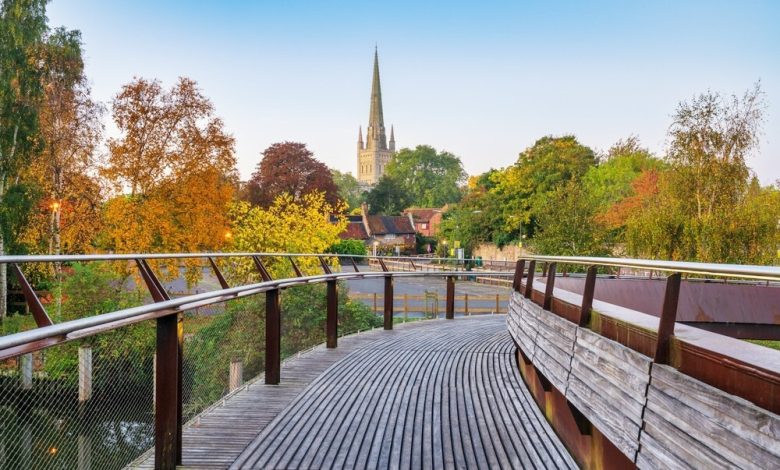
Norwich emerges as the UK’s “most depressed” city during this challenging season, with a quarter of its surveyed residents reporting genuine depression from mid to late January. The primary culprits? The consistently dreary weather and the minimal daylight hours that characterize British winters. The longing for sunshine isn’t unique to Norwich, but it appears particularly acute there, with 57 percent of respondents explicitly stating they’re currently craving sunlight and warmth. This collective yearning speaks volumes about our innate need for natural light—a biological dependency that modern living hasn’t eliminated. As Norwich residents look out at grey skies and feel the chill of winter, their experiences mirror what many across the country feel, though perhaps with greater intensity, making this East Anglian city the epicenter of seasonal gloom in Britain.
The winter blues aren’t confined to Norwich alone, as other cities across the UK report similar struggles with seasonal mood changes. Swansea and Stoke-on-Trent tied for second place, with 24 percent of their residents acknowledging seasonal depression. Manchester followed closely behind at 21 percent, while Edinburgh, Glasgow, and Oxford shared the fourth position at 16 percent. This geographical spread of winter discontent suggests that the phenomenon transcends local weather patterns or cultural differences—it’s a national experience, though felt more acutely in certain locations. These statistics paint a picture of a country collectively sighing through January, waiting for longer days and warmer temperatures to lift the pervasive gloom. The shared experience of winter blues creates an invisible bond among Britons, a common struggle that many endure silently while going about their daily lives.
While these findings provide an interesting snapshot of seasonal mood variations across the UK, they should be considered within context. The British Gas survey included only 2,000 participants nationwide—a modest sample when considering the population of even a single city like Norwich, which is home to approximately 150,000 people. Other studies have painted different pictures of regional happiness across the UK. The Office of National Statistics, for instance, identified the North East of England as the country’s most miserable region in a report from May of the previous year. Meanwhile, Rightmove’s research pointed to the East London borough of Barking and Dagenham as the UK’s least happy neighborhood. These varying results remind us that measuring happiness and depression across populations is complex and dependent on methodology, timing, and the specific questions asked. Each study provides a different lens through which to view the emotional landscape of Britain.
The good news for those struggling with the winter blues is that relief is on the horizon. Within two months, sunset times will extend beyond 7 PM, bringing noticeably longer evenings and more opportunity to enjoy natural light. This imminent change serves as a reminder that seasonal depression, while real and challenging, is also temporary. The cyclical nature of seasons ensures that no period of darkness lasts forever—the clocks will soon go forward, gifting Britons with extra evening daylight and the psychological boost that accompanies it. This knowledge offers a glimmer of hope to those currently experiencing the depths of January despair, a promise that brighter days are literally around the corner. For many, simply having this end date in mind makes the remaining weeks of winter more bearable.
Interestingly, perceptions of places often differ dramatically from lived experiences within them. While surveys and statistics might label certain areas as “depressed” or “worst,” residents and visitors frequently tell more nuanced stories. For example, another report mentioned a particular seaside city being named the “worst” in the UK, yet goes on to argue why it’s “actually great.” This contradiction highlights how objective measures of happiness or quality of life often fail to capture the subjective attachments and experiences that make places meaningful to those who know them well. Norwich may register high on the winter blues scale, but undoubtedly has qualities that make its residents proud to call it home during the other seasons. This complexity reminds us that places, like people, can’t be fully understood through simple labels or seasonal snapshots—they contain multitudes of experiences that change with the weather, the light, and our own shifting perspectives.







I really appreciate content like this—it’s clear, informative, and actually helpful. Definitely worth reading!
I like how you presented both sides of the argument fairly.
This content is gold. Thank you so much!
Thanks for taking the time to break this down step-by-step.
I wish I had read this sooner!
Hello my family member! I want to say that this post is awesome, nice written and come with almost all vital infos. I would like to see more posts like this.
I appreciate you sharing this blog post. Thanks Again. Cool…
I appreciate you sharing this blog post. Thanks Again. Cool bro
I appreciate you sharing this blog post. Thanks Again. Cool bro
I appreciate you sharing this blog post. link gacor Thanks Again. Cool bro
I appreciate you sharing this blog post. Thanks Again. Cool bro Slot Gacor
wow bro appreciate you sharing this blog post. link gacor Thanks Again. Cool bro nicee amazing
I appreciate you sharing this blog post. kampungbet link gacor terbaik