


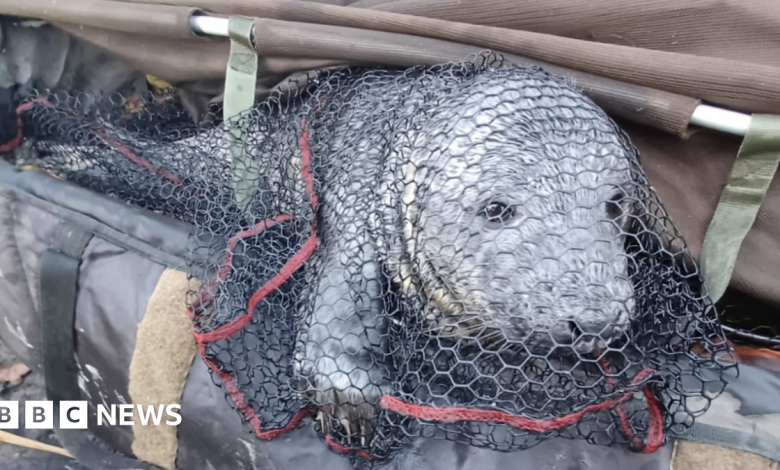
A Remarkable Rescue: Underweight Seal Pup Found in Unexpected Waters
In the early morning calm, just before the clock struck eight, a fisherman’s routine expedition took an unexpected turn when he discovered an emaciated seal pup in the most unlikely of circumstances. Sally Butler, a dedicated volunteer with a local marine wildlife rescue organization, received the urgent call that would set in motion one of the most unusual rescue operations of the season. “The fisherman was in his little rowing boat,” Butler recounted. “He’d caught a fish and was trying to get it into his keep net when the seal went in behind the fish.” The alarming condition of the young marine mammal was immediately apparent – weighing a mere 12 kilograms when healthy juveniles of its age typically reach between 30 and 45 kilograms. This concerning state prompted the immediate transfer of the pup to East Winch Wildlife Center, where specialists expressed cautious optimism for its recovery. “As long as it starts feeding for itself, hopefully it will be OK,” Butler noted, her voice carrying the measured hope that comes from years of witnessing both heartbreaking losses and miraculous recoveries in wildlife rescue work.
What made this particular rescue stand out as “remarkable” wasn’t merely the condition of the animal but the extraordinary location where it was found. Horning, a significant distance inland, represents an unusual environment for a seal to navigate to independently. While these marine mammals commonly venture upriver, finding one so far from the coast is a rare occurrence that captured the attention of local wildlife experts. This unexpected inland journey of an already compromised animal added complexity to an already challenging rescue situation. The discovery highlighted the sometimes unpredictable behaviors of wildlife and the importance of having knowledgeable responders who understand when intervention is necessary versus when nature should take its course uninterrupted.
This single rescue, however significant, represented just one small fraction of an exceptionally busy day for the wildlife charity. Friday brought a staggering 49 calls requiring response and assessment – a volume that might overwhelm many organizations but apparently falls within the expected range during peak season for this dedicated team. Butler explained that this heightened activity coincides predictably with the annual reproductive cycle of grey seals along the Norfolk coastline. Each year, thousands of grey seal pups are born on the stretch of coast encompassing Sea Palling, Horsey, and Winterton-on-Sea near Great Yarmouth, creating a seasonal surge in potential rescue situations as these young animals begin navigating their marine environment independently for the first time.
The natural behaviors of these juvenile seals often trigger concerned responses from well-intentioned beachgoers and coastal residents who mistake normal seal activities for signs of distress. Butler emphasized an important distinction in their rescue protocols: young seals on the move frequently generate calls from concerned citizens, but in many cases, these animals require observation rather than intervention. The natural process of young seals establishing independence includes behaviors that might appear concerning to untrained observers but represent normal developmental stages for these marine mammals. This educational component of wildlife rescue work – helping the public understand when to report concerns versus when to respectfully maintain distance – represents a significant but often unseen aspect of conservation efforts along coastlines where humans and marine wildlife share space.
The complexity of marine mammal rescue extends beyond identification of truly distressed animals to the regulatory frameworks that govern human intervention. Butler noted a critical consideration in seal rescue operations: moving healthy, uninjured seals, regardless of their location, requires specialized licensing. This regulatory oversight ensures that well-meaning rescue attempts don’t inadvertently cause more harm than good or unnecessarily disrupt natural behaviors. The intersection of compassionate response and regulatory compliance creates a carefully balanced approach to marine wildlife management – one that respects both the welfare of individual animals and the integrity of wildlife populations as a whole. This nuanced approach demonstrates the professionalism behind what might, from the outside, appear to be straightforward rescue operations.
While the underweight pup rescued from inland waters represents an exceptional case warranting intervention, its story illuminates the broader ecosystem of marine wildlife conservation along Britain’s coastlines. Each seal rescue occurs within a complex context of seasonal wildlife patterns, human-wildlife interactions, conservation regulations, and the dedicated individuals who navigate these intersections daily. The ongoing care for this particular seal pup continues at East Winch, where rehabilitation specialists will work to help it gain necessary weight and develop the skills needed for eventual return to its natural habitat. As climate changes and human coastal activities continue to evolve, these individual rescue stories provide valuable insights into the adaptations and challenges faced by marine wildlife – making each intervention not just an act of compassion for an individual animal but a contribution to our broader understanding of these remarkable species and their place in our shared environment.




You bring a fresh voice to a well-covered topic.
hjuiifsohnhtktvwmwmtjnmktqxjoz
dotdowythjyoqffhkvpymlhohgttid
I have been browsing online more than 3 hours these days, but I never discovered any interesting article like yours. It is lovely price sufficient for me. In my view, if all site owners and bloggers made excellent content as you probably did, the net might be much more useful than ever before.