Reviving Rural Traditions: Cawston’s Plough Sunday Celebration
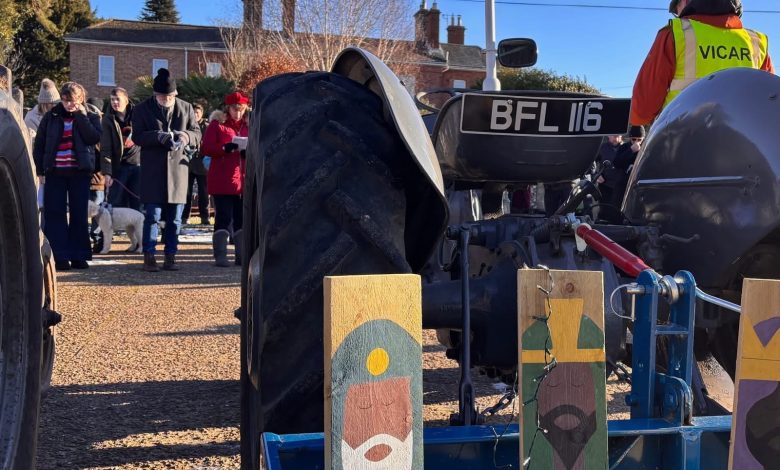
On a brilliant, sun-drenched Sunday morning in January 2025, the village of Cawston came alive with the revival of an ancient agricultural tradition. The Plough Sunday procession, reestablished by the local church over the past four years, drew its largest crowd yet as residents and visitors gathered to celebrate the beginning of the farming year. Ten tractors—a mix of vintage models and modern machinery—led a procession of more than 80 villagers along the route from Sygate to Cawston, their journey illuminated by perfect winter sunshine. The atmosphere was festive and communal, with participants stopping outside Broadland Winery to sing carols before continuing to Church Farm, where the assembled tractors and ploughs received traditional blessings. The celebration culminated at St. Agnes Church with a special service featuring a historic horse-drawn plough and the Three Wise Men making a memorable entrance on the back of Reverend Andrew Whitehead’s vintage “grey fergie” tractor—a delightful extension of the Christmas season into the agricultural calendar.
“This year’s Plough Sunday was our best yet,” shared Team Vicar Reverend Andrew Whitehead, who both organized and participated in the event. “The fantastic sunshine certainly helped bring out over 80 people to extend the Christmas celebrations just a bit further.” The Reverend expressed his joy at being part of the tractor procession on his classic Ferguson tractor and the special honor of delivering the wise men figures to the church’s nativity scene. This blend of Christian tradition and agricultural heritage created a meaningful connection between faith and farming—two foundational elements of rural Norfolk life. Beyond simply being a colorful spectacle, the celebration brought together different segments of the community, including vintage tractor enthusiasts alongside active members of the local farming community, creating a bridge between past and present agricultural practices.
The revival of Plough Sunday in Cawston represents the resurrection of a once-prominent East Anglian tradition. Historically celebrated on the first Sunday or Monday after Epiphany, Plough Sunday would see a plough ceremonially drawn through village streets amid singing, dancing, and communal revelry. This ceremonial blessing of the plough marked the beginning of the agricultural calendar as farmers prepared to return to their fields for a new season of plowing and cultivation. In medieval Cawston specifically, a dedicated Plough Guild gathered at the Plough Inn in nearby Sygate before processing into the village with great ceremony. These festivities weren’t merely for entertainment—they served to raise funds for the guild while emphasizing agriculture’s central importance to the community’s survival and prosperity. Participants would light candles and offer prayers for a bountiful harvest in the coming year, binding together spiritual practice and agricultural necessity.
St. Agnes Church in Cawston serves as a living museum of this agricultural heritage, housing a preserved horse-drawn plough that stands as a tangible reminder of traditional farming methods. The church treasures several artifacts connected to the plough traditions, including the original sign from the Plough Inn that closed in the 1960s, now proudly displayed above the historic plough. Perhaps most remarkable is the gallery dedicated to the medieval Plough Guild, featuring a carved inscription that reads: “God spede the plow and send us ale corn enow oor purpose for to make: At crow of cok of the plowlete of Sygate: Be mery and glade wat good ale yis work mad.” This charming Middle English prayer for good harvests and the ale they would produce offers a window into the priorities and daily concerns of villagers from centuries past, demonstrating how thoroughly intertwined agricultural success and community celebration have always been in rural Norfolk life.
The revival of Plough Sunday extends beyond Cawston, with similar celebrations planned throughout Norfolk. Aylsham Parish Church scheduled their observance for January 11th, inviting community members to gather in the Market Square at 10 am to view tractors and ploughs while enjoying hot chocolate and cookies before an 11 am church service featuring the blessing of a vintage plough. This celebration will include representatives from agricultural support organizations like YANA (You Are Not Alone) and FCN (Farming Community Network), highlighting the challenges faced by modern farming communities and the support systems available to them. The inclusion of these organizations demonstrates how these traditional celebrations have been thoughtfully updated to address contemporary rural concerns while maintaining their historical roots. Activities for children ensure that the tradition remains accessible and meaningful to younger generations, ensuring its continued relevance in community life.
Meanwhile, Norwich Cathedral planned its own Plough Sunday celebration with a special Evensong service at 3:30 pm on January 11th, preceded by a display of tractors and followed by locally made sausage rolls and beer served in the Nave. The participation of The Dean of Norwich, the Very Revd Dr. Andrew Braddock, underscores the significance of agricultural traditions even in more urban settings, recognizing the connections between city and countryside across Norfolk. These varied celebrations across the county demonstrate how traditional observances can be adapted to different contexts while preserving their essential purpose—to honor agricultural heritage, mark the rhythms of rural life, and bring communities together in celebration and blessing for the work ahead. As modern farming faces unprecedented challenges from climate change, economic pressures, and changing rural demographics, these revived traditions provide not just nostalgic entertainment but meaningful connection to the land and to one another, offering both continuity with the past and hope for the future of Norfolk’s agricultural communities.