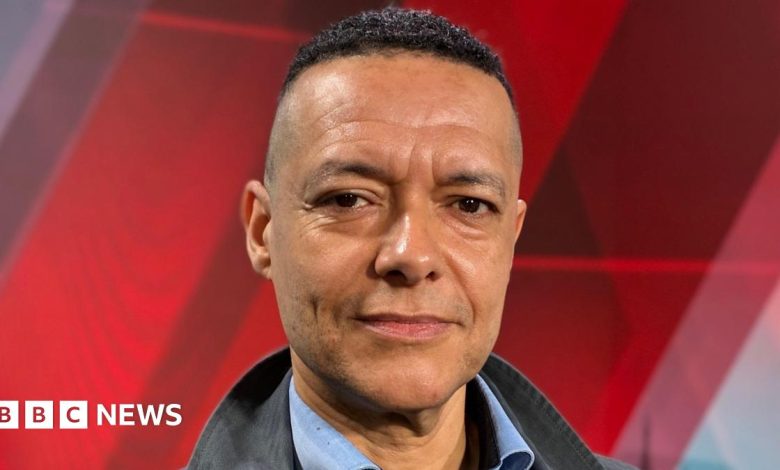
Clive Lewis: A Call for Change in Labour Leadership
In a candid interview with presenter Amelia Reynolds, Labour MP Clive Lewis expressed his ongoing concerns about Sir Keir Starmer’s leadership, making no secret of his belief that a change is necessary for the party’s future. Lewis, who became the first Labour MP to publicly call for Starmer’s resignation back in November, admitted that while he thought “this was it” during the recent party turbulence, he now believes it’s only a matter of time before Starmer steps down. His striking analogy compared the current leadership situation to “having a gangrenous leg” – something you can temporarily manage by hobbling around, but which ultimately requires decisive treatment. The Norwich South MP emphasized that postponing this difficult but necessary change would be “disastrous for both the country and the party,” revealing his deep concern about Labour’s trajectory under the current leadership.
Lewis’s critique extends beyond personality to what he sees as fundamental shifts in Labour’s culture and identity. He pointed to a troubling disconnect between the party’s promises and actions, suggesting that Labour’s increasing “proximity to wealth and power” has significantly altered public perception of the party. This transformation, in his view, undermines Labour’s core purpose and traditional constituency. The MP posed a direct question about whether Starmer is the right person to implement the necessary changes to reconnect with voters, strongly implying that he isn’t, though carefully avoiding naming potential alternatives. Instead, Lewis emphasized what he sees as the central issue: “The public is crying out for a government which will do the things which it set out to do” – a simple but powerful expectation that he feels is currently unmet.
Despite facing potential accusations of disloyalty, Lewis defended his outspoken stance by framing it as an act of commitment to Labour’s fundamental values rather than undermining the party. “I am not undermining the party, I just want Labour to do what it says on the tin,” he stated, positioning himself not as a rebel but as a guardian of Labour’s authentic purpose. This perspective suggests Lewis sees himself advocating for the party’s soul rather than engaging in personal attacks or factional politics. His comments reflect a belief that true loyalty sometimes requires challenging leadership when it appears to stray from core principles and promises made to voters who trusted Labour with their support.
Lewis also offered a revealing glimpse into the internal dynamics of the parliamentary party, suggesting that the apparent unity sometimes displayed publicly masks significant private dissatisfaction. Referring to Starmer’s recent appearance before Labour MPs amid leadership questions, Lewis claimed the show of support was largely theatrical: “There were lots of people giving him a standing ovation who I know didn’t mean it.” This observation hints at a widening gap between public demonstrations of solidarity and private concerns about Starmer’s leadership, suggesting that discontent within the parliamentary party may be more widespread than publicly acknowledged, with many MPs potentially concealing their true feelings while waiting to see how events unfold.
The MP’s intervention comes at a particularly sensitive time for Labour, with Starmer facing mounting criticism over various policy shifts and perceived failures to deliver on campaign promises. Lewis’s public stance represents a voice for those within and beyond the party who feel increasingly disappointed by what they see as a leadership that promised progressive change but has delivered something quite different. By speaking out so directly, Lewis has positioned himself as a voice for authentic Labour values, suggesting that the current leadership crisis is not merely about personalities but about the party’s fundamental direction and its relationship with the voters who brought it to power.
While Lewis’s comments will undoubtedly be dismissed by some as disruptive or unhelpful, they touch on a deeper question facing the Labour Party: what kind of political force does it want to be, and what relationship does it want with both power and the public? His critique suggests that Labour faces not just a leadership question but an identity crisis, caught between governance pragmatism and the idealistic vision that inspired many supporters. As the party navigates these turbulent waters, Lewis’s outspoken position ensures that difficult questions about Labour’s purpose and promises remain firmly in the public conversation, forcing both the leadership and the wider party to confront fundamental questions about their political project and what it means to truly represent Labour values in government.