The Timekeepers: Simon Michlmayr and His Team of Clock Restoration Experts
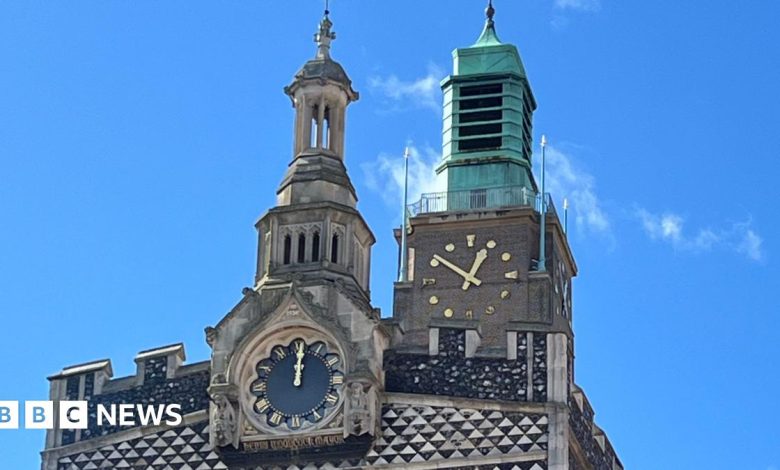
In the hushed chambers of historic town halls across England, where time itself seems to have settled into the ancient stones, Simon Michlmayr and his specialized team work their quiet magic. As the country’s foremost experts in large public clock restoration, they’ve recently been summoned to breathe new life into the timepiece adorning Ipswich Town Hall while continuing their ongoing care of Norwich’s City Hall clock. These craftsmen represent a vanishing breed of specialists who understand the intricate mechanisms that have kept communities running on schedule for centuries. “We go all over the country doing maintenance on public clocks,” Michlmayr explains with the understated pride of someone who has dedicated his life to preserving history’s steady tick.
The complexity of each restoration varies significantly, with the clock’s age often determining the level of challenge. “The difficulty depends on how old the clock is,” Michlmayr notes, his words reflecting decades of experience confronting mechanisms from different eras. Modern timepieces typically present fewer obstacles, having been designed with maintenance in mind, but it’s the ancient clocks—with their peculiar mechanisms and centuries-old engineering—that truly test the team’s expertise. These venerable timekeepers, some dating back hundreds of years, were created in eras when standardization was nonexistent, when each clockmaker employed unique techniques and solutions. Each restoration becomes a conversation across centuries, requiring Michlmayr and his team to understand not just horology, but the mindset of craftsmen long departed.
The physical demands of this specialized profession are considerable and often overlooked. “I go home some nights and I’m covered from head to foot in muck because you’ve had to crawl through stuff to get to the clock to fix it,” Michlmayr confesses. This image stands in stark contrast to the pristine façades of the public buildings they service. Their work frequently requires navigating narrow spiral staircases, squeezing through forgotten maintenance hatches, and balancing on ancient wooden beams. Clock mechanisms are typically hidden away in towers and attics, spaces not designed for human comfort but rather to house the mechanical heart of the building. These cramped, dusty environments have remained largely untouched for decades, sometimes centuries, collecting the grime of countless years while the clock faces outside maintain their dignified appearance to the public below.
Access presents one of the most significant challenges in their work. Many of Britain’s most impressive timepieces were installed in eras when worker safety was an afterthought, and reaching them now requires ingenuity, courage, and occasionally contortionism. Medieval towers never anticipated the need for modern maintenance crews, and Victorian installations often prioritized aesthetics over accessibility. Michlmayr’s team must sometimes devise complex scaffolding systems or employ specialized climbing techniques just to reach their patients. In some cases, parts of buildings must be temporarily modified to allow access to clocks that haven’t seen human contact in generations. These logistical challenges transform what might seem like straightforward mechanical repairs into complex engineering projects requiring coordination with architectural conservationists, building managers, and safety specialists.
Beyond the mechanical expertise and physical demands lies a deeper purpose to their work. Each public clock represents more than just a timepiece—it embodies the heart of a community, a shared reference point that has witnessed generations of local history. When Michlmayr restores a town hall clock, he reconnects residents with their heritage and ensures the continuity of a communal experience that spans centuries. In an age when time is increasingly displayed on digital devices, these mechanical marvels offer something more profound: a physical manifestation of time’s passage, powered not by batteries but by the same principles of physics that have governed timekeeping since the Middle Ages. Their resonant bells and visible hands provide a sensory experience of time that smartphones cannot replicate—they don’t just display time; they announce it, embody it, and celebrate it.
As towns like Ipswich and Norwich welcome back their restored timekeepers, they receive more than just functioning clocks. Michlmayr and his team deliver pieces of history renewed for future generations, ensuring that the rhythmic heartbeats of these communities continue uninterrupted. In a world increasingly defined by disposability and digital ephemerality, their work stands as a testament to permanence and continuity. These public clocks, with their freshly polished gears and newly calibrated movements, will continue marking the hours long after today’s digital devices have been discarded and forgotten. Through dust, cramped spaces, and engineering puzzles, Michlmayr’s team preserves not just mechanisms but monuments to humanity’s enduring relationship with time itself—a relationship that remains as relevant today as when these magnificent timepieces first began their steady count of our collective hours.