


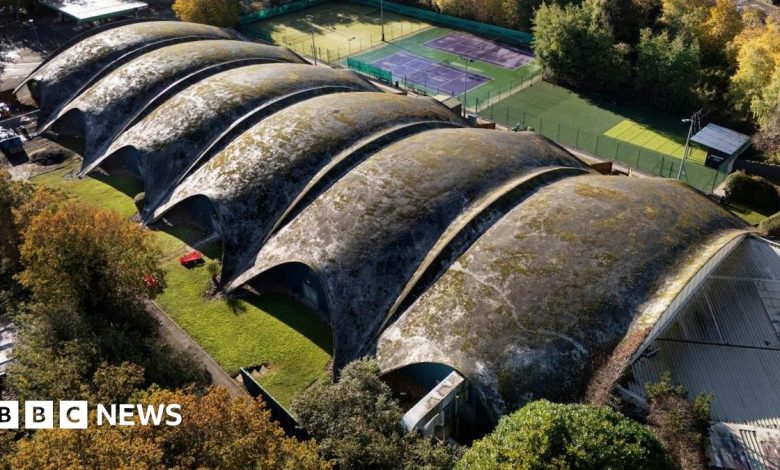
Heinz Isler’s Architectural Marvel in Norwich Receives Protected Status
On the centenary of Swiss architect Heinz Isler’s birth, his revolutionary concrete structure in Norwich has been awarded Grade II listed status by the Department for Culture, Media and Sport. The former Norwich Sports Village, which now operates as a David Lloyd health club in Hellesdon, stands as the only example of Isler’s innovative work in the United Kingdom. This recognition comes as a fitting tribute to the renowned engineer who lived from 1926 to 2009, leaving behind a legacy of architectural innovation that continues to inspire designers and engineers worldwide. The building’s unique design, inspired by hanging cloths that form natural curves when suspended and then inverted, represents a masterful application of Isler’s signature technique that pushed the boundaries of concrete construction.
The listing of this remarkable structure highlights its international significance and architectural importance, as noted by Tony Calladine, Historic England’s eastern region director, who praised it as “a remarkable and internationally significant building in the heart of the city.” Opened in 1988, the sports complex showcases Isler’s pioneering approach to thin-shell concrete structures, a method he developed and refined throughout his distinguished career. What makes the Norwich building particularly special is how it embodies Isler’s philosophy of finding structural efficiency through natural forms. His technique involved creating models with wet cloth, allowing it to freeze in its naturally hanging position, then inverting these shapes to create structurally sound forms that required minimal material while achieving maximum strength—an approach that was both aesthetically striking and environmentally considerate long before sustainability became a mainstream concern in architecture.
The Norwich Sports Village represents a perfect marriage of engineering brilliance and artistic vision. Isler’s thin-shell concrete structures were revolutionary in their efficiency, using significantly less material than traditional designs while maintaining exceptional structural integrity. The flowing, organic forms of the building’s roof evoke a sense of movement and lightness that seems to defy the heaviness typically associated with concrete. Visitors to the facility often remark on the interior’s surprising airiness and the quality of natural light that filters through strategically placed openings. These elements create an uplifting environment for physical activity, demonstrating how thoughtful architectural design can enhance the very function of a building. The structure stands as a testament to Isler’s belief that engineering solutions could be found by observing and respecting natural principles.
The timing of this recognition coincides with growing appreciation for late 20th-century architecture and the increasing awareness of preserving notable buildings from this period. While iconic structures from earlier centuries have long received protection, significant modern buildings have sometimes been overlooked or undervalued. The Grade II listing ensures that future modifications to the building will respect its original design intent and structural integrity, protecting Isler’s vision for generations to come. This recognition also draws attention to the broader context of experimental concrete architecture that flourished in the post-war period, when architects and engineers worldwide were exploring the plastic potential of concrete as a medium for expressing new forms and spatial concepts. Isler’s work represents a particularly refined and mathematically sophisticated branch of this exploration.
The Norwich structure also tells a story about international architectural influences in British regional development during the 1980s. That a Swiss engineer’s innovative design found its way to Norwich reflects the increasingly global nature of architectural practice during this period and demonstrates how cutting-edge international design thinking was being implemented beyond major metropolitan centers. For local residents who have used the facility over its three decades, the building represents both a familiar landmark and an extraordinary architectural achievement that connects their community to a wider narrative of innovative design. Many users might have appreciated the building’s unusual forms without necessarily knowing the sophisticated engineering principles behind them or recognizing the international significance of the structure in which they swam, played tennis, or exercised.
As the building begins its protected status, there’s an opportunity to celebrate Isler’s contribution to architectural history and educate the public about the significance of this unique structure. The Grade II listing not only preserves an important piece of architectural heritage but also invites a deeper appreciation of how engineering innovation can create spaces that enhance human experience. In an era increasingly concerned with sustainable construction and efficient use of materials, Isler’s work offers valuable lessons about doing more with less and finding inspiration in natural forms. The former Norwich Sports Village stands as a physical embodiment of these principles—a concrete poem to efficiency, beauty, and innovation that continues to serve its community while now officially recognized as part of Britain’s architectural heritage. This recognition ensures that Heinz Isler’s only UK creation will continue to inspire and intrigue visitors, just as he intended when his hanging cloth models first suggested the flowing forms that would ultimately rise in concrete on English soil.







**prodentim official website**
ProDentim is a distinctive oral-care formula that pairs targeted probiotics with plant-based ingredients to encourage strong teeth, comfortable gums, and reliably fresh breath
**herpafend**
Herpafend is a natural wellness formula developed for individuals experiencing symptoms related to the herpes simplex virus. It is designed to help reduce the intensity and frequency of flare-ups while supporting the bodys immune defenses.
**boostaro reviews**
Boostaro is a purpose-built wellness formula created for men who want to strengthen vitality, confidence, and everyday performance.
Aw, this was a really nice post. In thought I would like to put in writing like this moreover – taking time and precise effort to make a very good article… but what can I say… I procrastinate alot and in no way appear to get something done.