


Ash Wednesday: A Community United in Faith and Renewal
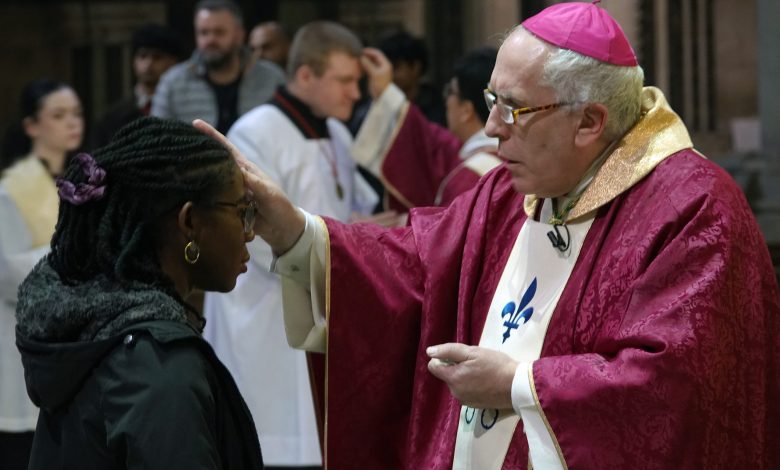
In a profound beginning to the sacred Lenten season, the Cathedral of St. John the Baptist in Norwich welcomed the faithful for Ash Wednesday Mass, presided over by Bishop Peter in an atmosphere of reverence and spiritual anticipation. The occasion was made more significant by the warm introduction of Fr. Martin as the new Cathedral Dean, with Bishop Peter extending the prayers and support of the entire diocesan family. This communal embrace of new leadership symbolized the enduring strength of the faith community in East Anglia, gathering together at this pivotal moment in the liturgical calendar. The Cathedral itself became a sanctuary of quiet devotion throughout the day, with four well-attended Masses and a continuous flow of visitors seeking prayer and the traditional imposition of ashes. From early morning until evening, the sacred space resonated with the collective spiritual yearning of people beginning their Lenten journey together, regardless of age or background.
The significance of Ash Wednesday extends far beyond the walls of Norwich Cathedral, touching every parish and community throughout the Diocese of East Anglia. This day marks the beginning of a shared forty-day pilgrimage of spiritual renewal through the traditional Lenten practices of prayer, fasting, and almsgiving. As congregants across the region received the cross-shaped ashes on their foreheads, they participated in a centuries-old tradition that transcends time and place. The physical mark of the ashes serves as both a humbling reminder of mortality and a visible commitment to interior conversion. “Remember that you are dust, and to dust you shall return” or “Repent, and believe in the Gospel” – these words, spoken as ashes were imposed, echo the essential call of Lent: to acknowledge human frailty and to turn again toward God’s endless mercy. The simplicity of this gesture belies its profound significance as a unifying ritual that connects every member of the faith community to one another and to Christians worldwide.
The Scripture readings proclaimed during the Ash Wednesday liturgy provided a spiritual framework for understanding the Lenten journey ahead. From the prophet Joel came a passionate invitation: “Return to me with all your heart.” This appeal underscores the true nature of repentance as an interior transformation rather than mere external observance. Joel’s instruction to “rend your hearts, not your garments” speaks directly to contemporary Christians who might be tempted by superficial spirituality. The prophet challenges believers to move beyond performative piety to authentic conversion – a message as relevant in twenty-first century East Anglia as it was in ancient Israel. This call to genuine heart-change establishes the foundation for meaningful Lenten practice, reminding the faithful that outward actions must flow from inward transformation if they are to bear spiritual fruit.
St. Paul’s urgent plea from the Second Letter to the Corinthians reinforced the timely nature of Lenten renewal: “We implore you on Christ’s behalf, be reconciled to God. Now is the favorable time; this is the day of salvation.” These words imbue the season with a sense of divine opportunity and holy urgency. Paul presents reconciliation not as a distant theological concept but as an immediate possibility – God’s grace made tangible in the present moment. For the congregation gathered at Norwich Cathedral and for parishes throughout East Anglia, this reading highlighted the Sacrament of Confession as a central element of Lenten practice. The Apostle’s message transforms Lent from a period of routine religious observance into a profound encounter with God’s mercy – a time when barriers between humanity and divinity can be overcome through humble acknowledgment of sin and openness to grace. In this way, Paul’s ancient words speak directly to the heart of contemporary spiritual longing for reconciliation and renewal.
The Gospel reading from Matthew presented Jesus’ teaching on the three traditional Lenten practices: prayer, fasting, and almsgiving. Christ’s instruction to perform these acts not for public recognition but in the secrecy of the heart offers a powerful counterpoint to modern culture’s obsession with visibility and external validation. In an age of social media and curated public personas, Jesus’ words call believers to cultivate an authentic interior life hidden from the eyes of others but seen by the Father “who sees in secret.” This teaching invites Christians throughout the Diocese to approach their Lenten commitments not as achievements to be displayed but as opportunities for genuine spiritual growth. Whether praying more intentionally, embracing meaningful sacrifice through fasting, or giving generously to those in need, these practices gain their true value not from the recognition they might bring but from the interior transformation they foster. The Gospel thus establishes Lent as a time to rediscover the quiet faithfulness that pleases God.
As the solemn distribution of ashes concluded and the faithful returned to their places marked with the sign of mortality and hope, the Cathedral of St. John the Baptist embodied the beginning of a shared spiritual journey. Young and old alike carried the visible mark of penitence – a cross-shaped reminder of both human limitation and divine promise. This powerful symbol transcended differences of age, background, and circumstance, uniting all present in humble acknowledgment of their need for God’s mercy. As the Diocese of East Anglia now progresses through its Lenten pilgrimage, the call heard within the Cathedral resonates through every parish and prayer group: return to the Lord with all your heart. In homes and workplaces throughout the region, the ashes received on this solemn day continue to inspire reflection and renewal as the faithful walk together toward the redemptive joy of Easter. Through personal prayer, communal worship, and acts of charity, the people of East Anglia respond to the invitation that stands at the heart of Lent – to turn away from sin, embrace the Gospel anew, and allow God’s transforming grace to prepare them for the celebration of Christ’s resurrection.






55jea1