Local Innovation Takes Center Stage at Research Park’s Innovation HotHouse Event
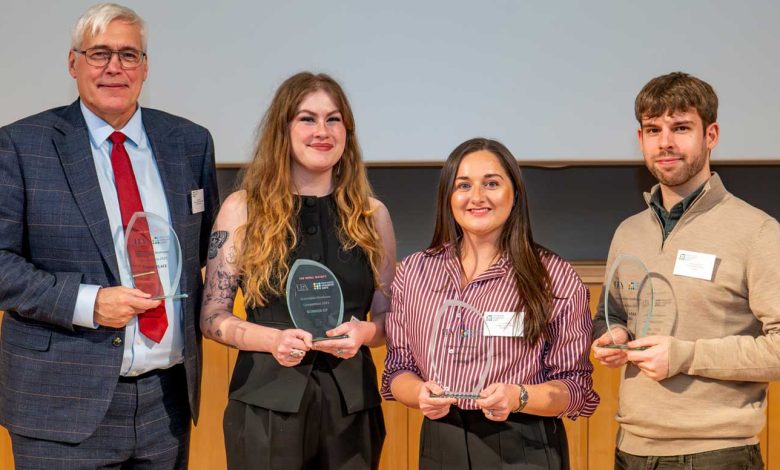
In an inspiring showcase of local scientific talent and entrepreneurship, the Innovation HotHouse event at Norwich Research Park highlighted remarkable innovations poised to address significant global challenges. The event, which serves as a launchpad for commercializing research from the Park’s institutions, crowned Quadlytics as the winner, recognizing the most promising ventures emerging from this vibrant scientific community. Founded by Quadram Institute scientist Hannah Morelli, Quadlytics is developing groundbreaking technology that identifies effective combinations of bacteriophages—helpful viruses that can target and eliminate harmful bacteria without antibiotics. This innovation comes at a critical time as the world grapples with increasing antimicrobial resistance, offering a natural alternative that could revolutionize treatments for humans and animals while helping to safeguard our environment from resistant bacterial threats.
The runner-up, RhosynBio, exemplifies the power of cross-institutional collaboration, having emerged from a partnership between the University of East Anglia, the Quadram Institute, and the Norfolk and Norwich University Hospital. Founded by Dannielle Cox-Pridmore, this startup is tackling the persistent challenge of bacterial biofilms—those stubborn microbial communities that adhere to surfaces and cause significant problems across multiple sectors. Their novel antimicrobial surface modification prevents biofilm formation, addressing issues that range from healthcare-associated infections to contamination in food processing facilities and corrosion in water systems. By disrupting biofilms before they can establish themselves, RhosynBio’s innovation promises to reduce the economic and human costs associated with these resilient bacterial communities, offering a preventative approach rather than just treating problems after they arise.
Taking third place was Zyvex® Antimicrobial, co-founded by Yan Fen Lee, which has developed an entirely organic, food-safe antimicrobial formulation that represents a significant advancement in food safety. This completely edible solution effectively reduces the presence of all Food Standards Agency-listed food-borne bacteria, including the particularly dangerous Listeria. What makes their approach particularly noteworthy is that the formulation uses only FSA-approved materials, making it immediately applicable in real-world food production and preservation settings without the regulatory hurdles that often delay implementation of new food safety technologies. This innovation addresses a critical need in global food systems, where foodborne illness affects millions annually and food waste from bacterial contamination represents both an economic and environmental challenge.
The Rising Star Award went to Agseer, founded by Joshua Williams from the John Innes Centre, recognizing early-stage innovation with exceptional potential. Williams is developing a sophisticated app for farmers that leverages artificial intelligence and computer vision to understand and manage complex mixed-species agricultural environments. What makes this technology particularly innovative is its approach to training data—the app creates digitally-simulated fields populated with 3D models of real plants, generating training datasets with diversity far exceeding what could be found in actual fields. This solution addresses one of the fundamental challenges in agricultural AI: the need for diverse, comprehensive training data that accounts for the incredible variety of growing conditions, plant species, and growth stages found in modern farming. By enabling autonomous robots to better understand these complex environments, Agseer could significantly advance precision agriculture, reducing chemical inputs while optimizing crop yields.
The event also showcased four other remarkable finalists spanning diverse fields from education to healthcare. Crit, founded by Frank Walker from UEA, has designed an assistive AI tool to remove language barriers for individuals with dyslexia, making written content more accessible. BeanTastic Hummus, founded by Rudy Maor, offers clean-label, nutritious hummus formulated with ingredients specifically targeting women’s health, including potential relief for menopause symptoms. WeAreHistoryHub, founded by Rosa Legeno-Bell, aims to transform history education in schools by providing inclusive teaching resources that align with national standards while actively decolonizing the curriculum. Rounding out the finalists was Vertebral Fragility Fractures, founded by Kate Lucas from NNUH, which provides early warning for osteoporosis by identifying vertebral fragility fractures, helping ensure patients receive appropriate bone health evaluation and treatment before more serious fractures occur.
The Innovation HotHouse event reflects the broader mission of Norwich Research Park to nurture scientific entrepreneurship and translate research into real-world impact. As Roz Bird, CEO of Anglia Innovation Partnership, the campus management company, noted: “With a unique breadth and depth of scientific activity on one campus, from agri-food to health-nutrition and the environment, Norwich Research Park offers huge potential for new spin-outs with ideas that can change the world.” The Park is already supporting over 40 startups through its campus-wide enterprise program, helping them develop their businesses and secure seed funding. This year’s participants represent the latest wave of innovations emerging from the Park’s collaborative ecosystem, spanning critical areas such as antimicrobial resistance, agricultural technology, educational accessibility, and women’s health. As these eight companies take their first steps toward commercialization, they embody the transformative potential of research when supported by the right ecosystem, expertise, and entrepreneurial mindset—a promising sign for both the regional economy and the global challenges they aim to address.