


Heinz Isler’s Iconic Norwich Sports Village Achieves Historic Grade II Listing
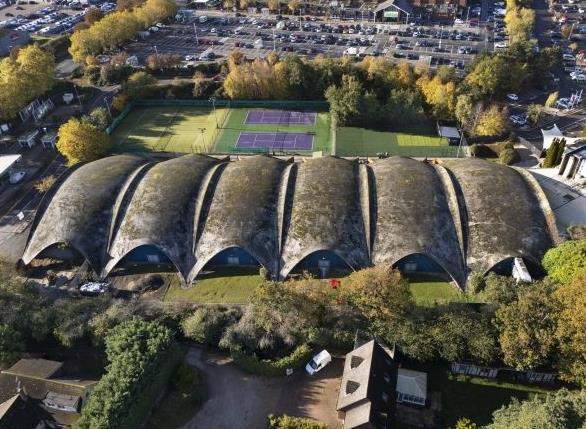
In a significant victory for architectural preservation, Heinz Isler’s remarkable Norwich Sports Village has been awarded grade II-listed protection, ensuring this unique piece of structural engineering will be safeguarded for future generations. The listing comes following a joint application from the Norwich Society and the Twentieth Century Society, recognizing the exceptional cultural and architectural significance of this one-of-a-kind complex. Completed in 1988, the sports facility located in Norwich’s Broadlands area represents the only example of Isler’s revolutionary concrete shell structures in the entire United Kingdom—a remarkable distinction that highlights its importance in the landscape of British architecture. While Isler’s innovative building technique resulted in approximately 1,000 such structures worldwide, the Norwich complex stands alone in Britain as a testament to his genius and forward-thinking approach to engineering.
The visual impact of the Norwich Sports Village is nothing short of breathtaking, with three main sports buildings topped by flowing, undulating concrete roofs that have been poetically described as resembling “plumped pillows.” These elegant canopies create an impression of movement, appearing to ripple and flow as though caught in a gentle breeze—a striking contrast to the typically rigid and angular forms associated with concrete structures. What makes these roofs even more astonishing from an engineering perspective is their remarkable thinness; averaging just 10 centimeters (about 4 inches) thick, they demonstrate Isler’s masterful understanding of structural efficiency and material optimization. This innovative technique was first pioneered by Isler in the mid-1950s for the Hotel Kreuz in Langenthal, Switzerland, where he began developing the methodologies that would eventually lead to his trademark style and international recognition.
The complex itself serves as a multi-functional sporting facility, currently operated as a David Lloyd sports club, providing diverse recreational opportunities for the Norwich community. Its thoughtful design encompasses three distinct structures: an ice rink featuring three gracefully arched bays, a tennis court and sports hall building expanded across six bays, and a standalone swimming pool housed beneath a single square-shaped bay. Each component demonstrates Isler’s commitment to creating spaces that are not only aesthetically pleasing but also perfectly suited to their functional requirements. The thin concrete shells provide expansive, column-free interiors that are ideal for sporting activities, while their organic forms create a sense of harmony with the surrounding landscape—a remarkable achievement considering the industrial nature of the building materials.
Catherine Croft, Director of the Twentieth Century Society (C20), eloquently captured the significance of the complex when she described the buildings’ “graceful, tent-like canopies” as a true “masterpiece of engineering.” Her comments highlight the dual achievement of Isler’s work—creating structures that are both technically brilliant and visually stunning. “These are unique structures in the UK and we’re delighted to see them recognized with national listing,” Croft stated, emphasizing the importance of preserving such rare examples of innovative architectural thinking. Perhaps equally significant, as Croft points out, is that the buildings continue to serve their original purpose efficiently, “providing an elegant and practical shelter for various activities beneath—a swim, trip to the gym, or a game of tennis.” This continued functionality speaks to the timeless quality of Isler’s design, which manages to be both avant-garde and thoroughly practical.
Isler’s work at Norwich stands among his most significant achievements, joining other celebrated examples of his distinctive roof designs around the world. Notable companions to the Norwich complex include the Deitingen Süd Motorway Service Station, constructed in 1968, and the Pavilion Sicli Cultural Centre in Geneva, completed in 1969. These structures, along with the now-protected Norwich Sports Village, represent Isler’s revolutionary contribution to architectural and engineering practice—utilizing the natural properties of concrete in thin-shell formations to create structures that are simultaneously lightweight, strong, and visually stunning. His approach challenged conventional wisdom about concrete construction, demonstrating how this often-maligned material could be transformed into something organic, flowing, and seemingly weightless.
The grade II listing of Norwich Sports Village represents more than just the protection of a unique building; it acknowledges the importance of preserving diverse architectural expressions from our recent past. As contemporary architecture increasingly embraces digital design and fabrication techniques, Isler’s work serves as a reminder of how innovation can emerge from a deep understanding of material properties and structural principles, even without advanced computational tools. The flowing forms of his concrete shells—achieved through a combination of careful experimentation, intuitive understanding of forces, and mathematical precision—continue to inspire engineers and architects today. For visitors to Norwich, the Sports Village offers a rare opportunity to experience firsthand the work of a master who could make concrete—often perceived as the most unyielding of materials—appear to dance and flow with the lightness of fabric. Its preservation ensures that future generations can continue to learn from and be inspired by Isler’s extraordinary vision and technical innovation.




I’m not sure why but this website is loading extremely slow for me. Is anyone else having this problem or is it a issue on my end? I’ll check back later and see if the problem still exists.
Loving the info on this site, you have done great job on the blog posts.