Tragedy on Mousehold Street: A Reflection on Prejudice and its Devastating Consequences
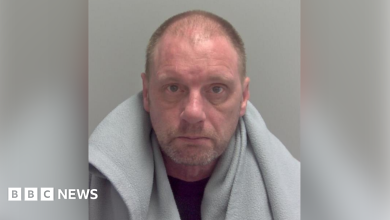
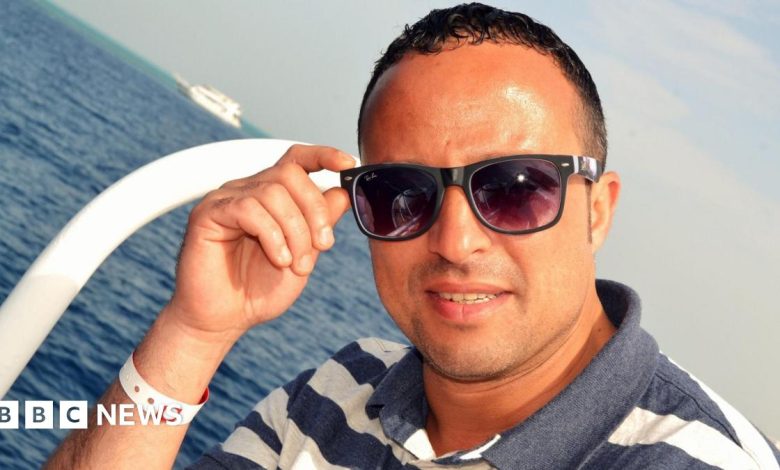
In a sobering courtroom scene, a jury recently heard the disturbing details of a violent attack that claimed the life of 48-year-old Mr. Chadli, a man later described by his grieving family as a “kind, caring and gentle guy.” The defendant, Vickers, took the stand to claim that his neighbor’s skin color and religious identity played no role in the tragic incident that unfolded on Mousehold Street. However, prosecutor Christopher Paxton KC painted a dramatically different picture for the court, describing Vickers as “a man consumed with anger and hatred” whose actions appeared to be driven by deeply rooted prejudice rather than any legitimate grievance.
The prosecution’s characterization was supported by damning evidence presented to the jury, including statements allegedly made by Vickers before the attack. According to testimony, he had declared, “I’m not letting these terrorists run my street,” a sentiment that, when coupled with his derogatory references to Black individuals, suggested a pattern of bigotry that may have festered for some time before culminating in violence. These statements stand in stark contrast to Vickers’ courtroom assertion that race and religion were irrelevant factors in the conflict, raising profound questions about the true motivations behind his actions and the dangerous potential of unchecked prejudice to escalate into tragedy.
The jury was confronted with particularly distressing evidence in the form of police body-worn camera footage captured at the scene. This footage documented the grim aftermath of the attack, showing officers discovering Mr. Chadli lying on the bathroom floor of the Mousehold Street residence, likely in the final moments of his life. The clinical nature of such evidence often belies the human reality it represents—a life suddenly and violently cut short, a family plunged into grief, and a community left to grapple with the ripple effects of hatred manifested as violence. The stark imagery from that body camera serves as a haunting reminder of how quickly intolerance can translate into irreversible harm.
Perhaps most revealing of the mindset allegedly driving this tragedy were Vickers’ own words captured as first responders fought to save Mr. Chadli’s life. While medical personnel worked desperately to revive the victim, Vickers reportedly complained that society was “bowing down to Muslims” and characterized Mr. Chadli as a “wrong ‘un” who had “pushed his luck.” These statements, uttered in the presence of a dying man, suggest not only a lack of remorse but a worldview in which certain lives are deemed less valuable based on perceived differences. The juxtaposition of these callous remarks against the urgent life-saving efforts underway highlights the profound disconnect that can occur when people are reduced to stereotypes rather than recognized in their full humanity.
The family’s description of Mr. Chadli as kind, caring, and gentle creates a poignant contrast with the hatred that apparently motivated the attack against him. Their words remind us that behind labels and prejudices are real people with loved ones, personal histories, and inherent dignity. Mr. Chadli was not merely a victim in a criminal case but a human being whose life touched others positively—someone whose absence will be deeply felt by those who knew his true character rather than the caricature that may have formed in his attacker’s mind. This disconnect between perception and reality often lies at the heart of hate-motivated violence, where targets are chosen not for who they truly are but for what they are presumed to represent.
As this case unfolds in the courtroom, it serves as a somber reflection of broader societal challenges regarding prejudice, integration, and the sometimes deadly consequences of dehumanizing rhetoric. While the legal system will determine Vickers’ fate according to evidence and testimony, communities everywhere might view this tragedy as an opportunity for introspection about how casual bigotry, unchallenged stereotypes, and divisive language can create environments where violence becomes more probable. The loss of Mr. Chadli—described by those who knew him best as gentle and kind—stands as a stark reminder that the ultimate cost of hatred is paid not in abstract principles but in irreplaceable human lives.