


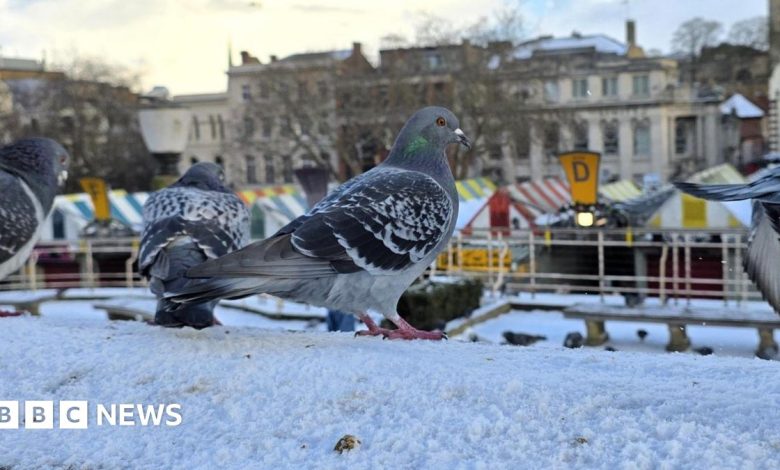
Norwich Market’s Pigeon Problem and the Brief Falconry Solution
Norwich Market has long struggled with a persistent pigeon problem that has troubled local traders for years. These birds, often seen as unwelcome visitors, have created ongoing concerns about cleanliness, health risks, and the overall shopping experience in this historic marketplace. Merchants have voiced their frustrations as pigeons swoop around stalls, leave droppings on products and surfaces, and generally create an environment that some customers find off-putting. The situation had reached a point where market traders were increasingly vocal about needing a solution to protect their livelihoods and maintain the market’s appeal as a vibrant shopping destination.
In response to these growing complaints, Norwich’s Labour-led council decided to take action by implementing an innovative but controversial approach. In late November, they launched a trial program employing professional falconers and their impressive Harris’s hawks to patrol the market area. The strategy was based on a simple ecological principle: the presence of natural predators would intimidate the pigeons without actually harming them, essentially creating a deterrent that would encourage the birds to relocate elsewhere. This non-lethal approach seemed to offer a promising balance between addressing traders’ concerns while avoiding the ethical issues associated with more direct control methods.
The falconry initiative, however, quickly sparked significant public debate and opposition within the Norwich community. Animal welfare advocates and pigeon enthusiasts mobilized against what they perceived as an unfair targeting of the birds. Their response was swift and multifaceted, including the creation and circulation of a petition opposing the hawks’ presence and organizing regular “feeding protests” in the Memorial Gardens adjacent to the market. These demonstrations weren’t subtle – participants deliberately brought substantial quantities of bird feed to spread in the area, directly counteracting the council’s efforts to discourage pigeon congregation. The controversy highlighted the deep emotional connections some citizens have with urban wildlife and raised questions about how communities should balance commercial interests against animal welfare concerns.
Council member Harper, who had been involved in implementing the falcon program, emphasized that the council’s intent was never to harm the pigeons but rather to support the market’s vitality. “This was always meant to be pro-market rather than anti-pigeon,” she explained, attempting to reframe the narrative around the initiative. Her comments reflected the council’s position that the health of the marketplace as an economic and cultural institution needed to be prioritized, while still acknowledging the concerns of those who valued the pigeons’ presence. Nevertheless, the intensity of the opposition forced the council to reconsider its approach despite the legitimate concerns of market traders that had prompted the intervention in the first place.
The situation reached a turning point when Harper announced that the hawk program would be paused indefinitely. In her statement, she specifically cited the actions of “a handful of individuals” who had undermined the initiative by distributing “industrial amounts of bird feed” in the area. This deliberate counteraction had essentially neutralized any effect the hawks might have had in discouraging pigeon populations. The council’s decision to halt the program wasn’t presented as a permanent abandonment of finding solutions to the pigeon problem, but rather as a strategic pause to “assess our enforcement options” against those who were deliberately sabotaging the effort through excessive feeding practices.
This Norwich market controversy illustrates the complex challenges cities face when managing urban wildlife issues. What began as a seemingly straightforward problem – pigeons disrupting market commerce – evolved into a community debate about urban ecology, animal welfare, economic interests, and the limits of municipal authority. The situation remains unresolved, with market traders still seeking relief from pigeon-related problems while activists continue to advocate for the birds’ place in Norwich’s urban landscape. As the council reconsiders its approach, both sides are left wondering what solution might eventually satisfy the diverse stakeholders in this unexpectedly contentious issue. Whatever approach comes next will need to more effectively balance the legitimate concerns of market traders with the passionate advocacy of those who see pigeons as valued members of the city’s ecosystem rather than merely nuisance wildlife.




Well I sincerely liked reading it. This information procured by you is very constructive for correct planning.