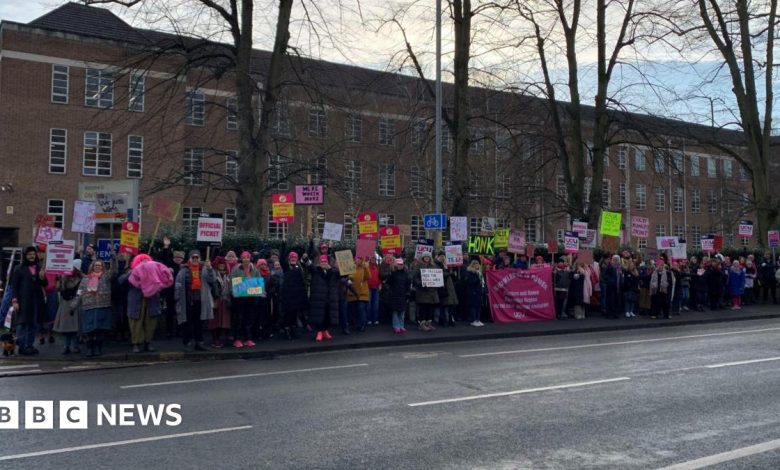
College Educators Strike Over Pay Disparities and Working Conditions
In a significant labor action, teaching staff across several colleges have initiated strikes to address growing concerns about compensation and working conditions. The collective educational institutions employ approximately 500 teaching staff and serve around 6,200 students aged 16-18, as well as 1,100 adult learners and 1,000 apprentices. This movement highlights the increasing challenges faced by educators in the further education sector, particularly as they compare their compensation to counterparts in other educational settings. The University and College Union (UCU), which represents more than 300 members across three colleges involved in the current dispute, has coordinated this action as part of a broader campaign that includes 24 other colleges across England where pay disputes remain unresolved.
Hunter, an inclusive learning lecturer at City College, articulated the central concern driving the strike action: “Staff at our college, and at colleges across the country, are facing a pay cut in real terms because pay is not keeping up with inflation, and hasn’t for many years.” This statement encapsulates the frustration felt by many educators who have watched their purchasing power diminish over time despite their continued dedication to students and institutions. The situation has created a troubling cycle where colleges struggle to attract and retain qualified teachers, particularly when competing against secondary schools where government-set pay scales offer more attractive compensation. Hunter emphasized this connection between fair compensation and educational quality: “Better pay means better teachers and keeping our teachers, and that’s better for our students.”
The practical implications of these staffing challenges are already apparent in day-to-day operations. Hunter noted that colleges face “real difficulty” in recruiting and retaining teachers, especially in core subjects like English and mathematics. This shortage directly affects students through canceled classes, inadequately covered lessons, and reduced access to instructors. The situation creates a destabilizing environment where educational consistency and quality are compromised, despite educators’ best efforts to maintain standards. These disruptions represent more than temporary inconveniences; they potentially undermine the educational foundations that students rely upon for their future academic and professional development.
Despite the strike action, City College has implemented contingency plans to keep all three of its sites operational during the labor action, though certain programs face unavoidable disruptions. The college confirmed that all scheduled assessments and examinations would proceed as planned, minimizing impact on students’ academic progression. However, the inclusive learning provision, some specialized courses, and certain adult education programs have experienced staffing shortages during the strike period. This partial disruption illustrates the balancing act that educational institutions must perform during labor disputes—maintaining essential services while acknowledging the legitimate concerns raised by their teaching staff.
College administration has expressed some sympathy with the educators’ position, acknowledging the pay disparity between further education teachers and their school-based counterparts. A spokesperson stated, “We share the union’s desire to see the pay gap closed between further education teachers and their counterparts in schools,” while noting that addressing this issue would require intervention at the governmental level. The college has committed to reviewing its pay structure in April, when potential additional student funding might be announced, suggesting a willingness to address compensation issues if financial circumstances permit. This position illustrates the complex financial ecosystem in which colleges operate, where institutional desires to fairly compensate staff often conflict with budgetary constraints.
Beyond compensation, the college leadership has indicated awareness of broader workplace concerns, particularly regarding workload management and staff wellbeing. “We have placed creating manageable workloads, supporting staff wellbeing and reducing sickness at the heart of our transformation process, which commenced earlier this year,” a spokesperson explained. The institution has expressed commitment to “working smarter, not harder” through the integration of new technologies and innovative teaching methodologies. This acknowledgment of workload concerns alongside pay issues reflects the multifaceted nature of the current educational labor environment, where financial compensation represents just one aspect of a broader conversation about sustainability and quality in further education. As this dispute continues, both educators and administrators face the challenge of finding solutions that balance fair compensation with institutional sustainability while ultimately serving the needs of students.