


A Bishop’s Green Legacy: Norwich’s Spiritual Leader Among UK’s Top Environmental Influencers
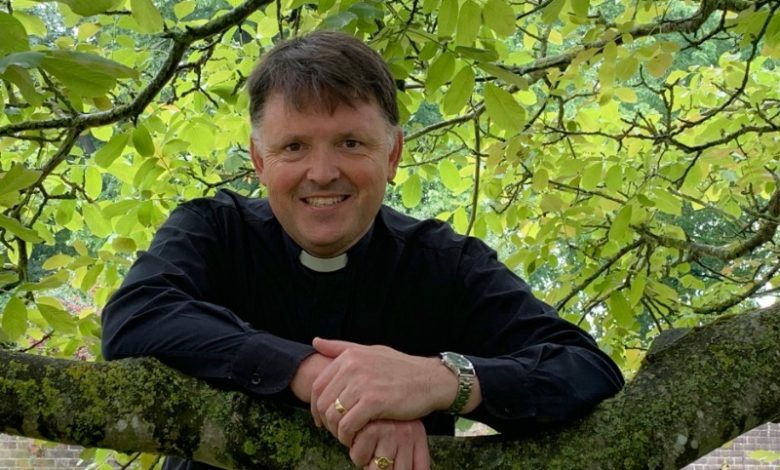
In a remarkable testament to the growing intersection of faith and environmental stewardship, the Bishop of Norwich, Graham Usher, has been recognized as one of the United Kingdom’s 100 most influential sustainability and climate leaders. This prestigious acknowledgment comes from the inaugural ‘edie 100’ list, a new initiative celebrating exceptional environmental leadership across the nation. Bishop Usher stands alongside corporate executives, charity leaders, and innovators who are collectively shaping a more sustainable future for the UK. His inclusion highlights an important evolution in religious leadership – one that increasingly recognizes ecological care as central to spiritual mission. “This recognition is for everyone in the Church of England working to protect the natural world and reverse biodiversity loss,” Bishop Usher remarked with characteristic humility. “It is part of our duty as Christians to care for and celebrate God’s wonderful creation – and speak up when we see it being harmed.” His statement reflects a growing movement within Christianity that views environmental stewardship not merely as a political stance but as a fundamental religious responsibility.
The Bishop’s environmental credentials are impressive and multifaceted. Serving as the Church of England’s lead bishop for the environment and the Anglican Communion’s lead bishop for biodiversity, he brings a unique combination of ecological expertise and theological insight to his role. With degrees in both ecology and theology, Bishop Usher bridges scientific understanding with spiritual conviction. This rare combination has enabled him to effectively advocate for environmental protection while framing these concerns within the context of Christian faith and practice. His work extends beyond mere advocacy, however, as he has been instrumental in developing the Church of England’s ambitious Net Zero Carbon 2030 program. This initiative represents one of the most progressive climate commitments of any major religious organization globally, demonstrating how faith communities can take concrete action against climate change.
From the pulpit to Parliament, Bishop Usher has consistently used his platforms to champion environmental causes. As a member of the House of Lords, he actively contributes to and scrutinizes proposed environmental legislation, ensuring that ethical and spiritual perspectives are not overlooked in policy discussions. His advocacy exemplifies how religious leaders can engage constructively with political processes while maintaining their distinct moral voice. On the ground, his initiatives have been equally impactful. The Bishop has been a passionate promoter of biodiversity recovery in churchyards – transforming these sacred spaces into havens for wildlife across the country. He has also been a staunch supporter of the national Eco Church initiative, which encourages parishes to integrate environmental concerns into every aspect of church life, from worship and teaching to land management and community engagement.
The impact of Bishop Usher’s leadership can be seen in parishes throughout England, where environmental awareness has become increasingly integrated into church activities. “Thousands of people in parishes across the country are seeking to reduce the carbon footprint of their churches, encouraging wildlife in churchyards, and ensuring recycling is part of church activities,” he notes. This grassroots movement represents a significant shift in church culture, with congregations increasingly viewing ecological responsibility as an expression of their faith rather than an addition to it. Bishop Usher has also contributed to the broader cultural conversation through his writing. His books explore the profound connections between spirituality and the natural world, inviting readers to encounter the sacred through their relationship with creation. This literary work extends his influence beyond institutional boundaries, reaching those who might not otherwise engage with religious perspectives on environmental issues.
The ‘edie 100’ list itself represents an interesting development in how environmental leadership is recognized in the UK. Selected by the edie editorial team and independent judges, the list spans diverse sectors including business, government, non-profits, and religious institutions. Named whimsically after the organization’s former tea lady, edie focuses particularly on promoting sustainability and net-zero carbon initiatives within the business community. The inclusion of a bishop alongside corporate sustainability directors from companies like Aviva, Google, Chanel, and the BBC signals a recognition that addressing climate change requires leadership from all sectors of society. It also acknowledges the unique moral authority that religious leaders can bring to environmental discussions, complementing the technical and policy expertise of other stakeholders.
Bishop Usher’s recognition comes at a critical moment in the climate movement, when many are seeking deeper meaning and motivation for environmental action beyond purely scientific or economic arguments. His approach demonstrates how ancient faith traditions can speak powerfully to contemporary challenges, offering spiritual resources for the work of ecological restoration. As religious communities worldwide increasingly recognize environmental protection as a sacred duty, leaders like Bishop Usher provide models for how to integrate care for creation into existing religious frameworks without compromising theological integrity. His example suggests that the path forward in addressing climate change must include not only technological and policy solutions but also cultural and spiritual transformation – a holistic approach that honors both scientific understanding and the deeper human yearning for meaning and purpose in our relationship with the natural world. In this way, the Bishop of Norwich represents a hopeful convergence of traditional wisdom and contemporary urgency, religious devotion and ecological responsibility, demonstrating that faith communities can be powerful allies in building a sustainable future.







itxdgb