Norwich Cathedral Hosts BBC Radio 4’s “Any Questions?” for Vibrant Political Discourse
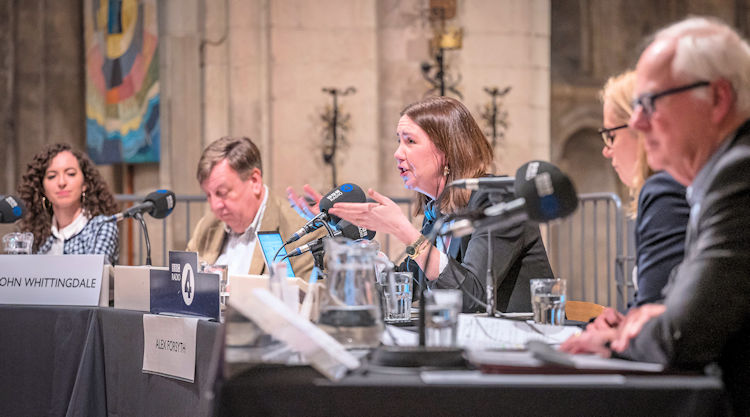
In a remarkable convergence of historic architecture and contemporary dialogue, Norwich Cathedral transformed into a forum for national debate on Friday, March 6, as it hosted BBC Radio 4’s flagship political discussion programme “Any Questions?” The event brought together high-profile political figures and thought leaders to address pressing issues facing the United Kingdom, all within the soaring medieval nave of one of England’s most magnificent cathedrals. Presented by Alex Forsyth, the live broadcast featured an illustrious panel including Sir Mark Lyall Grant, former national security adviser and UK ambassador to the UN; Treasury minister and Labour MP Lucy Rigby; Eleanor Shearer representing the think tank Common Wealth; and former Conservative cabinet minister Sir John Whittingdale MP. The diversity of perspectives created a dynamic environment for tackling some of society’s most complex challenges, demonstrating the cathedral’s commitment to fostering meaningful civic engagement beyond its religious functions.
The evening unfolded as a testament to democratic discourse, with audience members actively participating by posing challenging questions that spanned both domestic and international concerns. The discussion traversed weighty topics including the ongoing war in Iran, debates around energy policy and potential investment in North Sea gas fields, the evolving impact of artificial intelligence on youth employment opportunities, and the financial struggles confronting heritage buildings and the hospitality industry. These conversations reflected the multifaceted nature of contemporary British society, highlighting tensions between economic development, environmental sustainability, technological advancement, and cultural preservation. The cathedral’s magnificent space, which has witnessed centuries of history, provided a fitting backdrop for these forward-looking deliberations about the nation’s future direction and policy priorities.
“We were delighted that the Cathedral could host lively, informed and topical debate as part of its wider role in civic life,” remarked the Very Rev Dr Andrew Braddock, Dean of Norwich. His statement encapsulates a growing recognition among religious institutions of their responsibility to engage with broader societal issues beyond traditional worship. By opening its doors to this nationally broadcast discussion, Norwich Cathedral positioned itself as more than a historical monument or place of worship—it became a vital community space where citizens could directly engage with decision-makers and influencers. This represents a meaningful continuation of cathedrals’ historical function as centers not only of spiritual life but also of civic gathering, education, and public discourse throughout English history.
The programme itself carries a distinguished legacy within British broadcasting, having first aired in October 1948 during the post-war period when the nation was rebuilding and reimagining its future. For over seven decades, “Any Questions?” has maintained its commitment to traversing the United Kingdom, bringing together diverse panels of speakers who face unscripted questions from local audiences. This format has proven remarkably durable, offering a direct channel for citizens to challenge politicians, policy experts, cultural figures, and thought leaders on the issues that matter most to their communities. The programme’s enduring popularity speaks to a persistent public hunger for thoughtful political dialogue that transcends soundbites and partisan talking points, particularly in an era of fragmented media consumption and polarized political discourse.
The gathering at Norwich Cathedral exemplifies how historical institutions can remain relevant in the digital age by adapting to contemporary needs while honoring their traditions. As communities nationwide grapple with rapid technological change, environmental challenges, economic uncertainties, and evolving social norms, spaces that facilitate reasoned debate become increasingly valuable. The radio broadcast reached far beyond the cathedral walls, allowing listeners across Britain to engage with the discussions through live broadcast and subsequent availability on BBC Sounds. The image of political discourse unfolding beneath ancient stone arches created a powerful juxtaposition—contemporary democracy animated within a space that has witnessed the evolution of British governance from monarchy to modern parliamentary democracy over nearly a millennium.
As the evening concluded and the last questions were answered, participants departed Norwich Cathedral having participated in a tradition of public discourse that remains vital to healthy democratic functioning. The event demonstrated that despite technological advances and changing media landscapes, there remains immense value in physical gatherings where citizens and leaders meet face-to-face to address collective challenges. The success of the broadcast from Norwich Cathedral serves as a reminder that historic institutions need not be relegated to tourism and ceremony but can continue to play active roles in shaping national conversations. As Britain navigates an increasingly complex global landscape, these spaces for thoughtful exchange between diverse voices may prove more essential than ever—connecting the wisdom of the past with the pressing questions of the present and the possibilities of the future.