


A Revived Tradition: Plough Sunday in Cawston Village
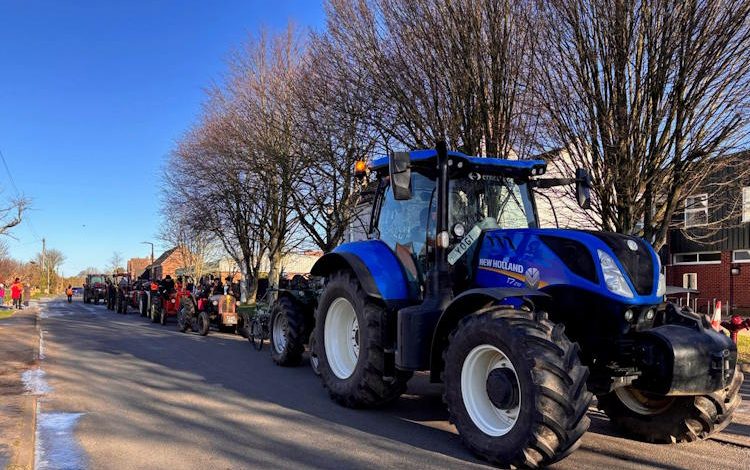
On a bright, sunny January day in the quaint Norfolk village of Cawston, an ancient tradition came alive once more as three wise men arrived at St. Agnes Church in perhaps the most unique fashion – aboard a vintage Ferguson tractor driven by the local vicar. This colorful scene marked the celebration of Plough Sunday, a centuries-old agricultural tradition that has been enthusiastically revived in Cawston over the past four years. The event perfectly blends Christian faith, agricultural heritage, and community spirit in a celebration that reaches back to medieval times while creating new memories for present-day villagers. On Sunday, January 4th, ten tractors of various vintages, followed by more than 80 villagers, processed from Sygate to Cawston under glorious winter sunshine, continuing a tradition that was once central to rural life throughout East Anglia.
The procession was a sight to behold, winding through the village streets in a display that connected present-day farming with centuries of agricultural history. Along the route, the parade paused outside Broadland Winery for impromptu carol singing, creating a festive atmosphere despite Christmas having officially ended. The journey continued to Church Farm where a meaningful blessing of tractors and ploughs took place, acknowledging the vital role these implements play in food production. The celebration culminated at St. Agnes Church, where a traditional horse-drawn plough – once used in the very fields surrounding Cawston – became the centerpiece of a special worship service. In a moment blending biblical narrative with local tradition, three wise men completed their journey to the church’s nativity scene, having traveled the final leg on the Vicar’s cherished vintage “grey Fergie” tractor rather than by camel or horse.
“Plough Sunday was the best yet this year, helped by the fantastic sunshine!” remarked Team Vicar Reverend Andrew Whitehead, whose enthusiasm for the event was evident as he drove his vintage tractor in the procession. “Over 80 people came out to help us extend the season of Christmas celebrations just a little bit further. It was good to be part of the procession of tractors again on my little grey Fergie, and a privilege to deliver the wise men to the church’s nativity scene.” The celebration attracted not only vintage tractor enthusiasts but also active members of the local farming community, creating a bridge between those who work the land today and those who preserve its history and traditions. During the service, special prayers were offered for agricultural workers, and both modern and vintage farm equipment received blessings for the vital work they enable in providing food for the community and beyond.
The modern-day celebration revives a tradition that was once a cornerstone of East Anglian rural life. Historically, Plough Sunday (or sometimes Plough Monday) was celebrated on the first Sunday or Monday after Epiphany, marking the beginning of the agricultural year. In times past, a ceremonial plough would be drawn through village streets amidst singing, dancing, and revelry. This was no mere entertainment – it represented the community’s recognition of agriculture’s central importance to their survival and prosperity. The blessing of the plough carried deep significance as the farming community prepared to begin a new season of ploughing and cultivation, their livelihoods dependent on favorable conditions and a successful harvest. In reviving this tradition, Cawston has reconnected with its agricultural roots while adapting the celebration for contemporary participants.
Cawston’s connection to this tradition runs particularly deep. During medieval times, the village boasted its own Plough Guild, which gathered at the Plough Inn in nearby Sygate. On Plough Sunday or Monday, guild members would process with a plough from Sygate into Cawston with great ceremony, raising funds for their organization while emphasizing agriculture’s importance to the community. Their celebrations included lighting candles and offering prayers for a bountiful harvest in the coming year. This historical depth adds special meaning to the modern revival, as today’s villagers literally follow in the footsteps of their predecessors from centuries past. St. Agnes Church itself stands as a physical repository of this agricultural heritage, housing not only a preserved horse-drawn plough but also the original sign from the Plough Inn, which closed in the 1960s. The church features a gallery dedicated to the Plough Guild, complete with a charming inscription carved on its edge that reads: “God spede the plow and send us ale corn enow oor purpose for to make: At crow of cok of the plowlete of Sygate: Be mery and glade wat good ale yis work mad.”
As rural traditions increasingly fade from living memory in many parts of Britain, Cawston’s revival of Plough Sunday represents a meaningful effort to maintain connections to agricultural heritage while building community in the present day. The event creates a rare opportunity for multiple generations to participate together in a celebration that honors both faith and farming. Young children experience the impressive sight of vintage tractors processing through their village streets, while older residents may recall when such machinery was commonplace in working fields. The celebration demonstrates how ancient traditions can be thoughtfully adapted for contemporary relevance, neither preserved as museum pieces nor abandoned entirely. By combining elements of Christian worship, agricultural blessing, community procession, and historical commemoration, Cawston’s Plough Sunday has found new life and meaning in the 21st century. As the villagers follow the tractors from Sygate to St. Agnes Church each January, they participate in a living tradition that connects them to the land, to their history, and to each other in ways that feel both timeless and immediate.



**mitolyn**
Mitolyn is a carefully developed, plant-based formula created to help support metabolic efficiency and encourage healthy, lasting weight management.
Great post. I was checking constantly this blog and I am impressed! Extremely helpful information specially the last part 🙂 I care for such info a lot. I was looking for this particular info for a very long time. Thank you and best of luck.
Great site! I am loving it!! Will be back later to read some more. I am taking your feeds also