


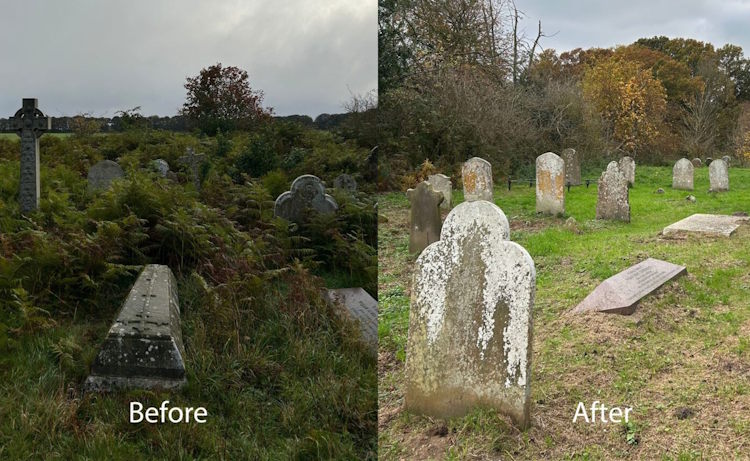
Community Payback Transforms Overgrown Churchyard Near Norwich
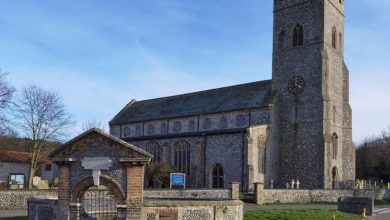
In a powerful example of community collaboration, an overgrown churchyard at St. Peter’s Church in Crostwick, just north of Norwich near Spixworth, has been dramatically transformed through a new partnership between the Diocese of Norwich and the Probation Service’s Community Payback scheme. This initiative represents the first success story in what promises to be an expanding program, with several additional churches slated to receive similar maintenance assistance in 2026. The partnership addresses a significant challenge faced by many historic churches across the region, where maintaining these beautiful but labor-intensive grounds has become increasingly difficult due to rising costs and limited resources. Church communities often struggle to find reliable and affordable maintenance services, as the expenses associated with proper equipment and labor can quickly become prohibitive for congregations with modest budgets. The Crostwick project demonstrates how thoughtful cooperation between different organizations can yield remarkable results that benefit multiple stakeholders while preserving important heritage sites.
The transformation at St. Peter’s churchyard has been nothing short of remarkable, changing what was once described as a dangerously overgrown “bracken covered field” into a safe, accessible, and welcoming space for the entire community. This dramatic improvement didn’t just enhance the aesthetic appeal of the churchyard; it restored its functionality as a place of reflection, remembrance, and community gathering. Nicola Lewis, serving as the Church Buildings Support Officer for the Diocese of Norwich, expressed profound gratitude for the intervention, noting that the local community had previously been overwhelmed by the maintenance challenges. “The churchyard at Crostwick had become dangerously overgrown and it wasn’t possible for the local people to look after it,” Lewis explained. “Thanks to Community Payback, the churchyard has been transformed… to a safe and tidy place for families and visitors to come.” This sentiment captures the relief felt by many small church communities when confronted with seemingly insurmountable maintenance challenges, and highlights how external partnerships can provide much-needed support for preserving these important cultural and spiritual spaces.
What makes this partnership particularly valuable is its multifaceted approach to community service, simultaneously addressing environmental stewardship, heritage preservation, and rehabilitation opportunities. Paul Appleyard, Probation Community Officer for the East of England Probation Service, who played a pivotal role in establishing this collaborative initiative, emphasized the wider significance of these projects beyond mere maintenance. “These projects are about more than just maintenance—they help preserve the heritage of our churches while creating spaces that encourage biodiversity and protect local wildlife,” Appleyard noted. This perspective reveals how thoughtfully designed community service can address multiple needs simultaneously, creating layered benefits that extend far beyond the immediate task of clearing overgrown vegetation. By recognizing churchyards as important ecological habitats as well as cultural sites, the program acknowledges the complex role these spaces play in both human and natural communities, and designs interventions that respect and enhance these multiple functions.
The benefits of this arrangement extend meaningfully to those serving community sentences through the Probation Service. Working outdoors in historically and culturally significant locations provides participants with purposeful activity that connects them to their local heritage and community in positive ways. Appleyard observed that individuals on probation typically respond very positively to church-based projects, noting, “They understand that they are completing valuable, worthwhile tasks for the local community while also supporting local flora and fauna through the environmental improvements we make in churchyards across the county.” This insight reveals how community service, when thoughtfully designed and implemented, can foster a sense of purpose, accomplishment, and connection that may prove transformative for participants. Rather than experiencing their community service as punitive or meaningless, participants can take genuine pride in contributing to the restoration and maintenance of spaces that hold significance for local residents, potentially shifting their relationship with the broader community in constructive ways.
The Diocese of Norwich has embraced this partnership with enthusiasm, recognizing its potential to address a widespread challenge across its network of historic churches. With multiple churches already identified for inclusion in the program’s expansion in 2026, the initiative promises to grow in scope and impact over the coming years. This forward-looking approach demonstrates how innovative collaborations between different sectors—in this case, religious institutions and criminal justice—can create sustainable solutions to longstanding challenges. The early success at St. Peter’s serves as a compelling proof of concept, showing how pooling resources and expertise can yield tangible benefits that neither organization could achieve independently. As the partnership develops, there will likely be opportunities to refine the model further, potentially incorporating additional elements such as skills training, educational components about local history and ecology, or community engagement activities that could deepen the program’s impact on all participants.
As communities across Norfolk and beyond continue to grapple with the challenges of maintaining historic buildings and grounds with limited resources, the Crostwick example offers an inspiring model of creative problem-solving through partnership. The transformed churchyard stands as physical evidence of what can be achieved when different parts of the community come together with shared purpose and complementary strengths. For the church, the program provides much-needed maintenance support that might otherwise be unaffordable; for the Probation Service, it offers meaningful community service opportunities with multiple benefits for participants; and for the broader community, it ensures the preservation and enhancement of valued public spaces that contribute to local identity, heritage, and quality of life. As the partnership between the Diocese of Norwich and the Community Payback scheme continues to develop in the coming years, it may well inspire similar collaborative approaches in other regions facing comparable challenges with historic site maintenance. The Crostwick churchyard transformation reminds us that when we combine resources and think creatively about community needs, solutions can emerge that serve multiple positive purposes simultaneously.



Users can easily access help via live chat, email, or phone support.
888starz link [url=https://888starz-eng.com/pl/]https://888starz-eng.com/pl/[/url]