



A Seaside Revival: Weybourne Church’s Extraordinary Day of Faith
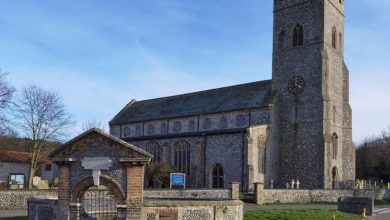
In a remarkable display of spiritual revival, the small coastal village of Weybourne in Norfolk witnessed an extraordinary event this past August. All Saints Church, a rural parish nestled along the Norfolk coast, celebrated 23 baptisms, confirmations, and reaffirmations of faith in a single day. The most striking aspect of this celebration was that 19 individuals chose to be baptized through full immersion in the sea at Weybourne Hope, the local beach. This powerful demonstration of faith represents a significant revival for a small village church and highlights the growing vitality of rural Christian communities that many might have assumed were in decline.
Reverend Ian Dyble, who has served as Rector of All Saints Church for five years, described the baptism ceremony as “a highlight of my Christian life.” Having been a Christian for four decades, Reverend Dyble was profoundly moved by the experience of baptizing nineteen people in the sea of a small Norfolk village. The journey to this momentous occasion began during the challenging days of the COVID-19 lockdown when Reverend Dyble moved to the coast and started conducting online services. These virtual gatherings laid the foundation for what would become a growing congregation that continued to flourish even after in-person services resumed. The pandemic, rather than hindering the church’s growth, seemed to catalyze a spiritual awakening in the community, drawing people to seek connection and meaning during uncertain times.
The baptism event itself was a community celebration that transcended traditional church hierarchies. The Bishop of Lynn, the Right Reverend Dr. Jane Steen, fully participated in the ceremony, wading into the sea alongside Reverend Adrian Wolton, the Associate Vicar, to help baptize the congregants. This image of church leaders immersed in the waters alongside their parishioners symbolizes a modern, approachable church that meets people where they are—both literally and figuratively. The involvement of leadership at various levels demonstrates a church that values genuine connection and authentic expressions of faith over rigid formality, making Christianity more accessible to those who might otherwise feel intimidated by traditional church structures.
A particularly noteworthy aspect of Weybourne Church’s revival is the growth in youth participation, largely attributed to Reverend Adrian Wolton, who joined the team sixteen months ago with a special focus on Children, Youth, and Families. The church has experienced a remarkable demographic shift, with 25% of the congregation now under 18 years old. Reverend Wolton’s philosophy is straightforward yet profound: “If you’re intentional and create a Jesus-centred culture, people will come. We’re either a loving community or we’re nothing.” This approach has not only attracted young people but has integrated them into the church’s functioning, with most youth serving on various teams. As Reverend Wolton aptly puts it, “I’d rather a noisy church than a dead church,” highlighting a preference for energetic engagement over quiet irrelevance.
The story of Weybourne Church offers valuable insights for other religious communities facing declining attendance and engagement. Rather than resigning themselves to the narrative of declining religious participation in modern society, the leadership at All Saints took proactive steps to build a vibrant community centered around authentic faith expression and inclusive participation. They embraced technology during the pandemic, prioritized youth engagement, and created opportunities for meaningful spiritual experiences like the beach baptisms. These approaches demonstrate that churches can thrive even in rural settings when they balance traditional faith with contemporary methods of connection and engagement. The emphasis on being a “loving community” speaks to the hunger for genuine human connection in an increasingly digital and isolated world.
This coastal baptism event transcends its local significance, offering a glimpse into the potential future of Christianity in rural England. While much media attention focuses on declining church attendance and the secularization of society, stories like Weybourne’s remind us that spiritual hunger remains a fundamental part of human experience. The church’s growth shows that when faith communities prioritize authentic relationships, meaningful participation, and inclusive approaches, they can experience revival even in unexpected places. For those interested in learning more about Weybourne Church’s growth and hearing from new members directly, information is available on the Diocese of Norwich website and at weybournegroup.org. As this small coastal parish continues its journey, it stands as a beacon of hope for rural churches everywhere, demonstrating that with intentional leadership and an open heart, spiritual revival can happen even on the quiet shores of Norfolk.



Can you be more specific about the content of your article? After reading it, I still have some doubts. Hope you can help me.