


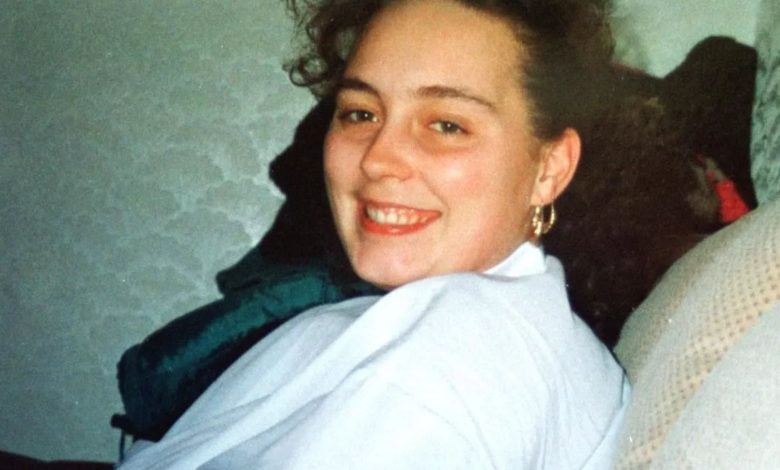
I’ll summarize and humanize this content about the unsolved disappearance of Kellie Pratt and its potential connection to serial killer Steve Wright.
# A Mother’s Disappearance and a Son’s Quest for Answers
In the summer of 2000, the streets of Norwich became the setting for a devastating mystery that remains unsolved to this day. Kellie Pratt, a 28-year-old mother of two, vanished without a trace on June 11, leaving behind children who would grow up wondering what happened to their mother. Kellie had been working hard to overcome heroin addiction and was attempting to leave sex work behind. Most heartbreakingly, she disappeared just weeks after making arrangements to reunite with her sons. The last known sighting of Kellie was outside The Rose Inn pub in Norwich at approximately 11:30 pm, wearing a black skirt, black t-shirt, and light blue coat. During her final known moments, she received a phone call and mentioned she was with “a punter.” When she failed to appear at a prearranged meeting spot, her friends reported her missing. More than two decades later, while no body has ever been found, Kellie is presumed dead – leaving her family in a painful limbo between grief and uncertainty.
Kellie’s son Kurtis, who was just a child when his mother disappeared, has now grown into a 30-year-old man determined to find answers about what happened to his mother. Having spent most of his childhood in foster care following his mother’s disappearance, Kurtis describes growing up “scared of the world” due to his “tumultuous upbringing.” Though he has few personal memories of his mother and was told little about her during his childhood, he feels connected to her through small similarities – noting that they share the same curly hair and even the same initials. Despite the passage of time, the mystery of his mother’s fate continues to haunt him. “I just learned to live with the mystery of what happened to her and where she went,” Kurtis explains, “but I now realize it would help me to know.” This lingering uncertainty has led him to a painful conclusion: if his mother were still alive, she would have made contact with him at some point over these past two decades.
Recent developments in another case have offered Kurtis a potential path toward answers. Steve Wright, known as the “Suffolk Strangler,” recently admitted to murdering 17-year-old Victoria Hall in September 1999 – approximately nine months before Kellie Pratt disappeared. Wright is already serving a whole-life sentence for murdering five women in Ipswich in 2006: Tania Nicol (19), Gemma Adams (25), Anneli Alderton (24), Paula Clennell (24), and Annette Nicholls (29). Victoria Hall’s body was discovered in a ditch after she vanished following a night out with friends in Felixstowe. The confession marks the first time Wright has admitted to any murder, despite his previous convictions. What makes this development particularly significant for Kurtis is the geographic and circumstantial connections between Wright and his mother’s case. Wright had previously run a pub in the Norwich area with his ex-wife Diane Cole, who reported that he would frequently disappear and leave her to manage the bar alone.
The timing and location of Kellie’s disappearance align with a disturbing pattern of violence against women in the region, particularly those involved in sex work. Norfolk Constabulary previously investigated potential links between Kellie’s disappearance and the murder of 16-year-old Natalie Pearman, another sex worker who was killed by asphyxiation in 1992. Additionally, two years after Kellie vanished, 22-year-old Michelle Bettles was found strangled and abandoned in woodland on March 29, 2000. She had also worked in Norwich’s red-light district. Other unsolved cases potentially connected to Wright include Jeanette Kempton, a 31-year-old found strangled near the A12 in Suffolk in February 1989, and Amanda Duncan, a 26-year-old sex worker who disappeared from Ipswich in July 1993. The geographic consistency, the targeting of vulnerable women, and Wright’s presence in these areas during the relevant time periods create a compelling, if circumstantial, case for his involvement in these unsolved disappearances and murders.
In a heart-wrenching appeal directed at the convicted killer, Kurtis has asked a simple question: “Do you know where my mum’s body is?” His plea reflects the unique agony experienced by families of missing persons – the inability to properly mourn without confirmation of death or the dignity of a proper burial. “I want to reach out to Steve Wright directly,” Kurtis explained, suggesting that if Wright “wanted to rectify – even a little bit of damage he caused to his victims – it would be really important.” For Kurtis, knowledge of his mother’s fate would provide a measure of closure that has eluded him for most of his life. “All he can do now is cooperate to the best of his ability and try and get some kind of good karma out of this by letting us all know what’s happened and who the victims are, where they are,” he said. This plea for truth reflects Kurtis’s belief that after decades of feeling “numb” to the realities of his mother’s case, answers would finally allow him to “move on.”
Kurtis’s appeal comes amid growing concerns that Wright’s known victims may represent only a fraction of his crimes. Keith Wright, the killer’s half-brother, told reporters: “It’s time he did the right thing and told the police everything… How many more victims are there? I’d like to say that this is it, but I’m not convinced anymore.” In a disturbing revelation, Keith mentioned that Wright had lived with him just months after murdering Victoria Hall, showing “no outward signs of what he had just done.” This sentiment was echoed by Diane Cole, Wright’s former wife, who described her ex-husband as “the epitome of evil” and urged him to “break the habit of a lifetime and just tell the truth.” Both family members expressed their support for the victims’ families, acknowledging the need for answers and closure. As Wright serves his life sentence, the families of victims like Kellie Pratt are left waiting and wondering if he will ever reveal the full extent of his crimes. For Kurtis, and potentially many others, the truth remains painfully out of reach – buried with secrets that only the Suffolk Strangler himself can reveal.







4hxvez
27tdmy
i5s93v