Fury as nearly one in six town clocks no longer work in signal of the ‘collapse of the common good’

Britain’s Crumbling Clocks: A Nation Losing Time
Britain is facing a quiet crisis in its public spaces as nearly one in six town clocks have stopped functioning entirely, according to recent Freedom of Information figures. This national timekeeping breakdown reveals that 15 percent of council-owned public clocks no longer tick, while many others are in such disrepair that local authorities cannot even confirm whether they work at all. These silent timepieces tell a story that goes beyond mere inconvenience—they represent a visible symbol of civic decline across the country. From historic market squares to town halls, these once-proud features of British public life now stand frozen in time, their hands motionless as the communities around them continue to change. Alfie Dennen from Stopped Clocks points out that the issue transcends simple timekeeping, warning that non-functioning clocks make communities feel “uncared for” and signal a broader erosion of “the common good”—a troubling indicator of how public spaces and shared heritage are being neglected in modern Britain.
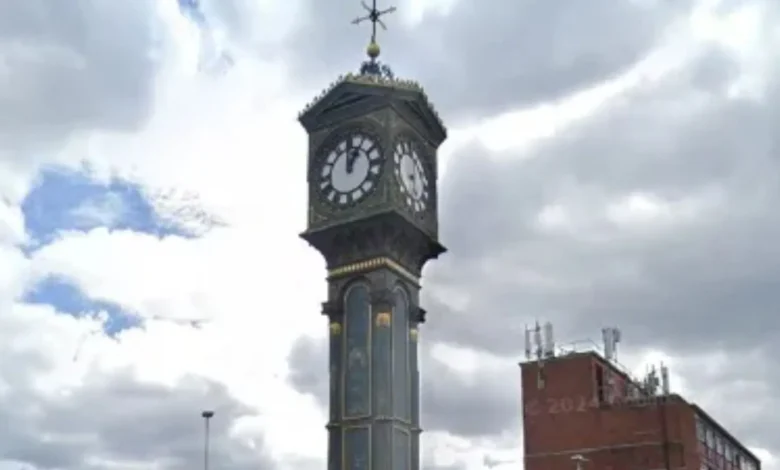
The problem spans the entire country, affecting iconic landmarks and humble town centers alike. In Birmingham, the Grade II-listed Aston Cross tower stands as perhaps the most embarrassing example, with its four clock faces displaying different times, creating confusion rather than clarity for passersby. Hemel Hempstead presents an equally concerning case, where both of Dacorum Council’s public clocks have ground to a halt. This includes the impressive 1851 Old Town Hall timepiece that once presided over a bustling high street—now frozen solid, its hands motionless as shoppers pass beneath. Even the capital hasn’t escaped the phenomenon, with the historic clock at London’s Leadenhall Market—a site dating back to the 14th century—having given up its steady rhythm. The Guildhall clock in Norwich, once visited by King George VI and a point of local pride, now stands silent. Meanwhile, in Bury, the 1914 neo-medieval Whitehead Clock tower has stopped dead, its ornate hands frozen in position as another emblem of civic pride gathers dust in plain sight.
The explanation for this widespread decline lies primarily in financial constraints, according to council representatives across the country. Local authorities, facing what they describe as “severe funding pressures,” report they can no longer afford the specialist parts and technical expertise required to maintain these timepieces. Many clocks feature intricate mechanisms that demand particular skills to repair and maintain—skills that are becoming increasingly rare and expensive in the modern age. Unless a clock holds significant “heritage interest” that might attract special funding or conservation efforts, many councils simply cannot justify allocating limited resources to their repair when facing competing demands for essential services. This pragmatic but unfortunate reality reflects broader challenges in local government financing, where maintaining historical features often falls to the bottom of priority lists during periods of austerity and budget constraints.
The situation has been exacerbated by changes in property ownership, with many councils selling off historic civic buildings entirely as part of cost-cutting measures or regeneration schemes. When ownership transfers to private hands or development companies, the fate of public-facing features like clocks often becomes uncertain. Without the civic responsibility that once motivated their maintenance, these timepieces frequently slip into disrepair with no clear party responsible for their upkeep. This shift represents a broader change in how public spaces are managed and maintained in contemporary Britain, with traditional symbols of communal life increasingly vulnerable to neglect when their care doesn’t align with commercial interests. The result is a landscape where once-reliable markers of time—and by extension, community organization—have become unreliable or entirely non-functional.
Perhaps nowhere illustrates the crisis more clearly than Torbay, where the situation has deteriorated into what could only be described as a full-blown fiasco. In this coastal region, only one in five public clocks actually works, with some having been inoperative since 2015. This extended period of dysfunction speaks to how normalized such neglect has become in certain areas. Local Liberal Democrat Swithin Long has voiced criticism of the Conservative-run council, noting that residents are “right to be annoyed” about this visible sign of municipal neglect. Their frustration reflects a broader public sentiment that these non-functioning timepieces represent not just practical inconvenience but symbolic evidence of declining standards in public services and community care. In a region that relies heavily on tourism, the inability to maintain basic public amenities like clocks sends a concerning message about local governance priorities.
While the outlook appears gloomy, there are some signs of potential recovery on the horizon. In Torbay, for instance, plans to repair at least two of the broken clocks are slowly moving forward, though progress remains glacial. Across the country, various heritage groups and community organizations have begun advocating for the restoration of these important civic features, recognizing their value beyond mere timekeeping. These efforts highlight how public clocks serve as anchoring points in communities—visual reminders of shared history and collective identity that many feel are worth preserving. Yet the challenges remain substantial: finding skilled craftspeople, securing appropriate funding, and prioritizing these projects against competing demands all present significant hurdles. For now, many of Britain’s once-proud public timepieces remain stuck in their own dark ages, their hands frozen at moments in the past while the nation moves forward around them. The question remains whether Britain will find the resources and will to restore these symbols of civic pride, or if they will become permanent monuments to an era when public spaces received greater care and attention.