


A Community Gathered in Faith: Palm Sunday Celebrations at Norwich Cathedral
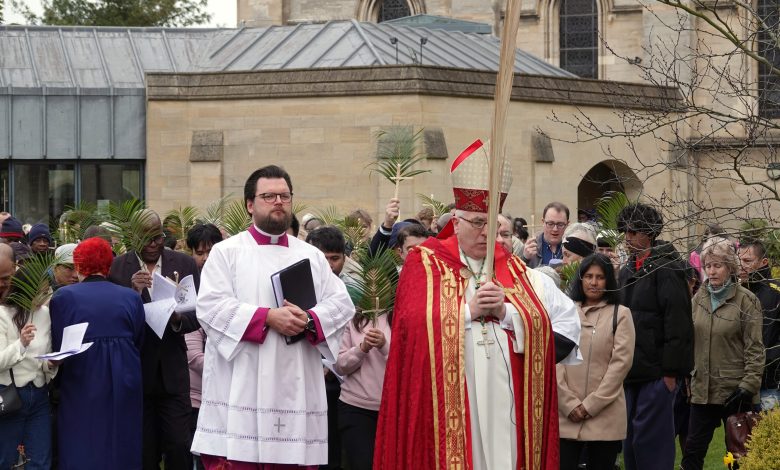
The faithful of the Diocese of East Anglia came together in a profound demonstration of community and devotion on Sunday, March 29th, as they filled St. John the Baptist Cathedral in Norwich to celebrate Palm Sunday. This significant liturgical occasion marked the beginning of Holy Week, setting the stage for the most sacred days in the Christian calendar. The cathedral grounds became a space of shared anticipation as parishioners assembled in the garden, awaiting Bishop Peter Collins and the ministers, their spirits lifted by the choir’s sacred melodies floating through the spring air. This gathering wasn’t merely ceremonial—it represented a community united in faith, preparing to journey together through the remembrance of Christ’s final days. As Bishop Peter offered his warm greeting and invitation for conscious participation, one could sense the collective shift toward a deeper spiritual mindfulness, a communal decision to step away from everyday concerns and into sacred time.
The blessing of the palms transformed simple branches into meaningful symbols of faith and commitment. As Bishop Peter sprinkled holy water over the palm fronds, these ordinary plants became reminders of Christ’s kingship and the faithful’s pledge to follow in His path. The Gospel reading of Matthew 21:1-11 transported the congregation to ancient Jerusalem, allowing them to envision Jesus entering the holy city amid shouts of “Hosanna!” Following this powerful scriptural moment, Deacon Jonathan’s chant of “Procedamus in pace” (Let us proceed in peace) and the congregation’s response “In nomine Christi. Amen” (In the name of Christ. Amen) initiated a solemn yet joyful procession. Led by the thurifer with incense rising like prayers toward heaven, followed by the cross, acolytes, servers, and choir, the community became pilgrims walking in Christ’s footsteps. This wasn’t merely a ceremonial walk but a public witness of faith as they proceeded from the garden onto the street before entering the cathedral, their voices joined in hymns that connected them to Christians across centuries who have similarly commemorated Christ’s triumphant entry.
Inside the cathedral’s sacred space, the Liturgy of the Word unfolded with readings that prepared hearts and minds for the week ahead. Isaiah’s portrayal of the Suffering Servant (50:4-7) resonated through the cathedral, painting the image of one who remains steadfast amid affliction, foreshadowing Christ’s unwavering commitment to God’s will despite knowing the suffering that awaited Him. The second reading from Philippians (2:6-11) presented the profound paradox at the heart of Christian faith—that Christ, though divine, embraced human vulnerability and accepted death on a cross. Yet this wasn’t the end of the story, as the same passage proclaimed His exaltation, offering the faithful a glimpse of glory beyond suffering. These ancient texts, read in this community of believers, connected contemporary worshippers to a timeless narrative of divine love and sacrifice, inviting them to see their own struggles and triumphs within this greater story.
The congregation stood in reverent attention as the Passion of Our Lord Jesus Christ according to Matthew was proclaimed. Unlike typical Gospel readings, this extended narrative invited active participation, with the faithful joining at designated moments—becoming, in effect, witnesses to the unfolding drama of salvation. The collective voice of the congregation speaking the words of the crowd created a powerful reminder of humanity’s complicity in Christ’s suffering, yet also affirmed the community’s present-day commitment to follow Christ faithfully. This participatory proclamation transformed the Gospel from a distant historical account into an immediate, lived experience. Standing throughout this lengthy reading was not merely tradition but a physical expression of respect and attention, as bodies joined minds and hearts in contemplating the mystery of God’s love manifested in Christ’s willingness to suffer.
Bishop Peter’s homily served as both encouragement and gentle challenge to the gathered faithful. Recognizing the special nature of this community assembly after periods of separation, he emphasized the importance of regular gathering for prayer, particularly during the sacred days of Holy Week. His words reminded all present that Christian faith is not solely a private matter but flourishes in community celebration and shared liturgical experience. The bishop’s invitation to deepen relationships with Christ through participation in the Church’s liturgical life struck a balance between honoring individual spiritual journeys and affirming the essential communal dimension of faith. His words underscored that walking with Christ through Holy Week isn’t merely about remembering historical events but about allowing those events to transform present lives and relationships.
The Palm Sunday celebration at St. John’s Cathedral offered the Diocese of East Anglia a meaningful threshold into Holy Week—a liturgy that engaged all the senses and invited full participation of heart, mind, and body. Through the blessed palms carried home, parishioners took tangible reminders of their commitment to follow Christ through the coming week and beyond. The procession, readings, and Eucharist wove together a tapestry of faith that connected this local community to the universal Church across time and space. As documented in photographs shared with the broader community, this celebration demonstrated that ancient rituals remain vibrant and relevant, creating sacred space where heaven and earth meet, and where ordinary people encounter extraordinary love. In walking this path together—from hosannas to the cross, and ultimately to resurrection—the faithful of East Anglia affirmed their identity as people of hope, even in the face of suffering, trusting that Christ’s journey through death to life illuminates their own.






Cudowne 💕 przedstawienie problemu
Fantastyczny pomysł, na pewno wykorzystam
Uwielbiam takie treści