From Reel to Real: The Tale of a Norwich Treasure
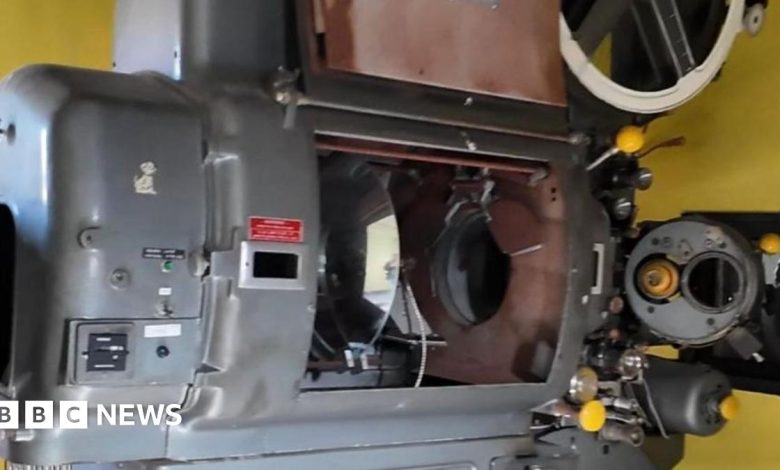
In the heart of Norwich, a remarkable story of cultural preservation unfolded when a vintage Cinemeccanica Victoria 8 film projector was saved from potential destruction. The rescue mission gained momentum after Peter Leigh, a locally beloved broadcaster and blogger known online as “Nostalgia Nerd,” brought attention to the projector’s uncertain fate through his social media platforms. This Italian-made projector, first introduced to the world in 1961, wasn’t just any piece of equipment—it represented a golden era of cinema and had earned its reputation as a crown jewel of projection technology in the film industry. Leigh expressed his profound relief that this historical artifact wouldn’t be “ending up as trash in a bin,” highlighting the importance of preserving such technological heritage so future generations can appreciate the physical machinery that once brought movies to life before the digital revolution.
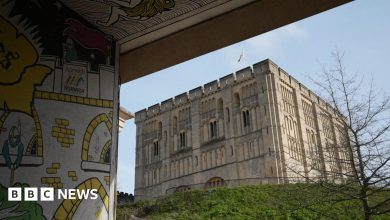
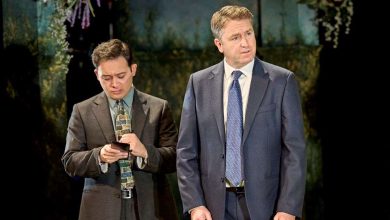
The story speaks to a broader cultural conversation about what we choose to keep and what we allow to fade away. While the projector found salvation, the same couldn’t be said for all cultural elements at risk—notably a mural featuring Alan Partridge, the fictional character deeply associated with Norwich. Carli Harper, serving as the council’s cabinet member for major projects, acknowledged this bittersweet outcome, noting: “It’s a shame we can’t save the Partridge mural, but we will look to replicate it elsewhere in the city.” This balanced approach to preservation reflects the difficult choices communities often face when weighing progress against heritage, deciding which pieces of the past deserve space in the present landscape of the city.
The rescue of the Cinemeccanica Victoria 8 wasn’t just a spontaneous act but rather a deliberate collaboration between civic leadership and academic institutions. The council took proactive steps to ensure this piece of cinematic history wouldn’t be lost, reaching out to the local university which “gladly accepted” the offer to house the projector. This partnership demonstrates how different sectors of a community can work together to safeguard cultural artifacts. The university’s willingness to become the custodian of this technological relic ensures that it will remain accessible not just to students but to the broader public and members of the British film industry who understand its significance in the evolution of cinema projection.
There’s something profoundly human about our attachment to obsolete technology. The Cinemeccanica Victoria 8, while no longer the cutting-edge marvel it once was, represents a tangible connection to how people experienced movies for decades. When Peter Leigh remarked, “It is good to have it preserved so people can see it,” he was acknowledging that physical encounters with historical objects offer something that digital preservation alone cannot. There’s an irreplaceable value in standing before the actual machine that once whirred and clicked in darkened projection rooms, threading celluloid through its mechanisms to cast moving images onto silver screens. This visceral connection to cinema’s mechanical past helps us understand not just how films were shown but how the theatrical experience itself was crafted.
The preservation of this projector also serves as a reminder of cinema’s international nature. That an Italian-made machine became so integral to British film exhibition demonstrates how the art of moviemaking and movie-showing transcends national boundaries. The Cinemeccanica Victoria 8’s journey from its origins in 1961 Italy to becoming a protected cultural artifact in twenty-first century Norwich illustrates the global connections that have always characterized the film industry. Now housed at a university, the projector stands to educate new generations about these international relationships that shaped entertainment long before digital globalization became commonplace.
As Norwich moves forward with its development plans—the context in which this preservation tale unfolded—the saving of the Cinemeccanica Victoria 8 provides a template for how communities can honor their past while embracing their future. The projector now exists as both a practical educational tool for university students and a symbolic reminder of cultural stewardship. While the Alan Partridge mural may need to find a new home, the commitment to recreate it elsewhere shows that even when physical preservation isn’t possible, cultural memory can still be maintained. In this balanced approach, Norwich demonstrates that progress and preservation need not be opposing forces but can instead work in harmony to create richer, more layered communities that value both their heritage and their horizons.