Fatal Police Shooting in Thetford: The Tragic Case of Dean Keeble
In the quiet town of Thetford, an ordinary evening in February turned into a tragedy that would raise serious questions about police use of lethal force and the split-second decisions that officers must make. This incident, involving local resident Dean Keeble, began with a simple traffic accident but escalated to become the first fatal police shooting in Norfolk’s history.
The evening started routinely enough when Norfolk Police responded to a collision between a Honda Jazz and a Mercedes van near the entrance to Thetford cemetery on London Road around 8:30 PM. The driver of the Honda had sustained minor injuries in the crash but had refused hospital treatment. What might have been a straightforward traffic incident report quickly evolved into something far more serious, as concerned citizens began calling the police with alarming news: a man had left the accident scene carrying what appeared to be a handgun. Multiple witnesses reported spotting this armed individual walking along London Road, creating immediate public safety concerns in this normally peaceful area.
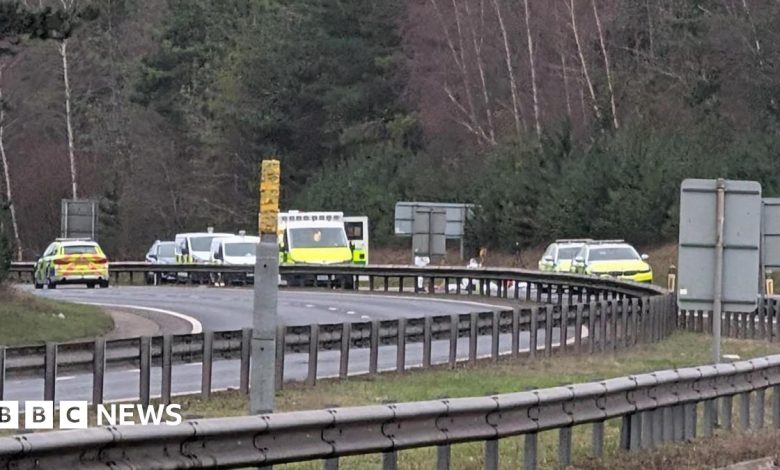
Armed response officers were quickly dispatched to locate the man, identified later as Dean Keeble, a resident of Thetford. They found him about a mile from the original accident scene, standing alongside the A11 highway. The confrontation that followed would change many lives forever. According to police reports, the officers issued two clear commands for Keeble to drop his weapon. What happened in those tense moments remains under investigation, but the outcome was tragic – two officers each fired a single shot, both striking Keeble. Despite immediate first aid efforts by the same officers who had fired their weapons, Keeble was pronounced dead at the scene at approximately 10:15 PM, less than two hours after the initial traffic accident report.
The Independent Office for Police Conduct (IOPC) immediately launched an investigation into the shooting, as is standard procedure whenever police use of force results in death or serious injury. This case represents a significant moment for Norfolk Police, as fatal police shootings are extremely rare in the UK compared to some other countries. The IOPC spokesman provided limited information while the investigation continues, noting: “We will aim to issue our findings once all proceedings – if any – are complete.” In a detail that has drawn attention from the community, the spokesman added, “But please note, all officers are still being treated as witnesses.” This means that, at least initially, the officers involved were not considered suspects of wrongdoing in the shooting.
Further highlighting the preliminary assessment of the incident, the IOPC confirmed that all officers involved in the shooting remained on active duty and continued to be authorized to carry firearms. This decision suggests an initial determination that the officers’ actions may have been within departmental policy and legal guidelines for the use of deadly force. However, many in the community and Keeble’s family await the full investigation results before drawing conclusions about what happened that night on the A11. Questions remain about the nature of the weapon Keeble was carrying, his mental state at the time, and whether alternative approaches might have resulted in a different outcome.
As this case unfolds, it touches on broader issues facing police departments throughout the UK: the challenges of responding to potentially armed subjects, the training provided to firearms officers for de-escalation, and the mechanisms for accountability when lethal force is used. For the people of Thetford, this incident has transformed their community into the unexpected backdrop for a national conversation about police practices and the tragic circumstances that can unfold when ordinary situations rapidly escalate. Meanwhile, behind the headlines and investigations, there remains the human reality – a life cut short, officers who must live with the consequences of their actions, and a community trying to understand how a traffic accident on a winter evening ended with such finality by the side of the A11.