


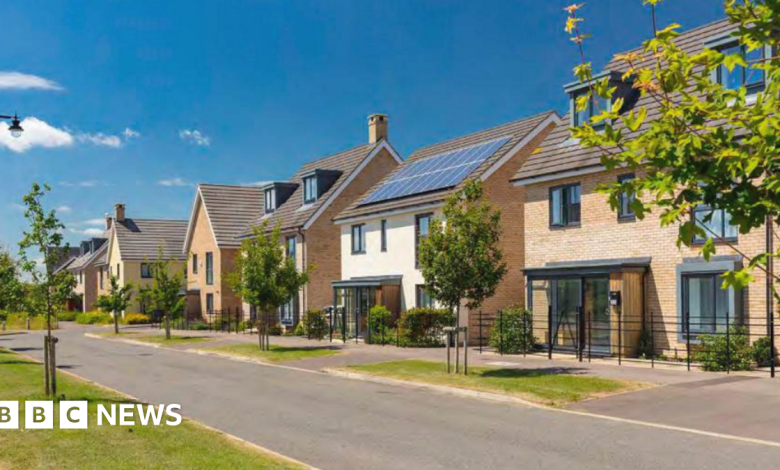
Transforming Rackheath: Historic Housing Development Approved on Former US Airbase
In a unanimous decision that marks a significant turning point for Norfolk’s housing landscape, Broadland District Council’s planning committee has given the green light to one of the most ambitious residential developments in the region’s history. Taylor Wimpey’s proposal to construct 3,850 homes on the site of a former US airbase in Rackheath has been fully endorsed, setting the stage for a dramatic transformation of this small village located just north of Norwich. This development represents more than just new housing—it signifies the birth of what will essentially function as a new town, creating a continuous urban area connecting Rackheath with neighboring Salhouse. The scale of this project is remarkable, with projections indicating that Rackheath’s current population of approximately 2,000 residents will swell to over 11,000 once the development is complete—a more than fivefold increase that will fundamentally alter the character and dynamics of this rural community.
The approved plans extend far beyond residential properties, encompassing a comprehensive vision for community infrastructure that aims to support this substantial population growth. Two primary schools will be constructed to serve younger children in the expanded community, while a new secondary school will provide educational continuity for older students. The development will also feature a leisure center designed to promote physical activity and community engagement among residents. Additionally, two shopping precincts are planned, which will not only provide convenient access to retail and services but also potentially create employment opportunities for local residents. This holistic approach to community planning reflects an understanding that successful large-scale developments must provide more than just housing—they must create livable, sustainable communities with access to essential services and amenities.
This massive development arrives at a critical juncture in the UK’s ongoing housing crisis, where demand for affordable homes consistently outstrips supply, particularly in desirable areas like Norfolk. The project’s supporters argue that developments of this scale are necessary to address the severe housing shortage that has led to skyrocketing prices and limited options for first-time buyers and growing families. By utilizing the land of a former US airbase, the development also represents an example of brownfield regeneration—repurposing previously developed land rather than encroaching on untouched greenfield sites. This approach aligns with sustainable development principles that prioritize the efficient use of land resources and the revitalization of sites that might otherwise remain underutilized or abandoned.
The transformation of Rackheath raises important questions about rural identity and community cohesion during periods of rapid growth. The village, historically a small rural settlement with a strong sense of community and place, will undergo a fundamental shift in character as it expands into what effectively amounts to a new town. Current residents may experience mixed emotions about this change—appreciation for new amenities and infrastructure improvements balanced against concerns about increased traffic, pressure on existing services during the transition period, and potential loss of the village’s traditional character. The challenge for planners, developers, and local authorities will be to manage this growth in a way that respects and incorporates elements of Rackheath’s heritage while creating a cohesive community where both longtime residents and newcomers feel a sense of belonging and ownership.
Environmental considerations also play a significant role in the development’s context. While the use of a brownfield site is environmentally preferable to developing pristine countryside, a project of this magnitude inevitably raises questions about ecological impact, resource use, and sustainability. The construction process itself will generate carbon emissions and waste, while the completed development will increase demands on local water supplies, sewage systems, and energy infrastructure. The success of the development from an environmental perspective will depend largely on how thoroughly sustainability principles are integrated into its design—from energy-efficient buildings and renewable energy installations to green spaces that support biodiversity and sustainable transport options that reduce car dependency. Taylor Wimpey and local authorities will face scrutiny regarding how effectively they balance development needs with environmental responsibilities.
Looking ahead, the Rackheath development represents both an opportunity and a test case for large-scale housing projects in rural England. If successfully implemented with sensitivity to community needs, environmental considerations, and quality of life factors, it could serve as a model for addressing housing shortages while creating vibrant, sustainable communities. The project’s long-term success will ultimately be measured not just by the number of homes built or profits generated, but by whether it creates a place where people genuinely want to live—a community with a strong identity, adequate services, employment opportunities, and quality public spaces. As construction begins and the vision starts to take physical form, all eyes will be on Rackheath as it undergoes this historic transformation from small village to thriving new town, with lessons that will likely influence housing policy and development approaches across the UK for years to come.




2qirv6