The Journey of the 10-Foot War Horse Sculpture: From Controversy to New Beginnings
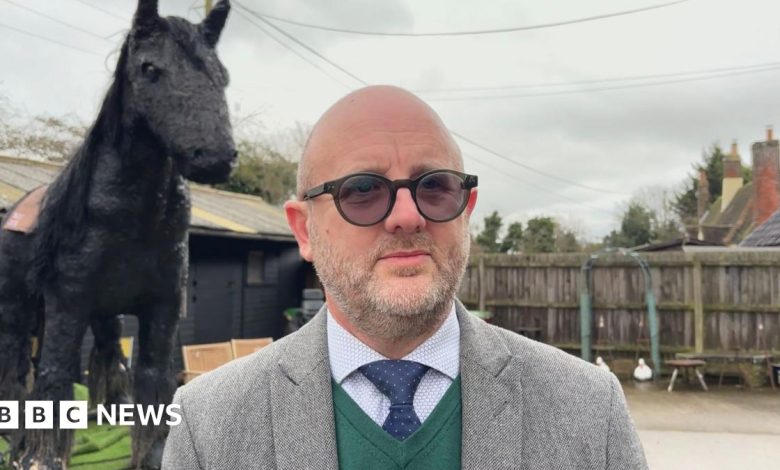
Standing proudly at 10 feet (3 meters) tall, a remarkable War Horse sculpture created by Norfolk artist Damian O’Connor has finally found a peaceful resting place after years of controversy. This imposing artwork, crafted from a combination of steel, wood, and reeds, was designed with a profound purpose – to honor the memory of millions of horses that lost their lives during wartime conflicts. The sculpture’s journey has been as eventful as it is symbolic, reflecting how public art often navigates the complex terrain between expression, regulation, and acceptance. When it first appeared on roundabouts around Norwich in 2017, the massive equine creation quickly became a local talking point, with many appreciating its artistic merit and poignant message, while officials from the Norfolk county council labeled it an “obstruction” – highlighting the perpetual tension between art in public spaces and practical considerations of safety and regulation.
The War Horse’s presence near the Northern Distributor Road and other locations around Norwich sparked conversations about what constitutes appropriate public art and who gets to decide where such pieces belong. While many residents embraced the sculpture as a powerful memorial and an impressive artistic achievement, authorities were more concerned with potential distractions to drivers and adherence to planning regulations. This disagreement reflects a broader societal conversation about the role of commemorative art in public spaces and the balance between emotional impact and practical considerations. Despite the controversy, or perhaps because of it, the sculpture succeeded in drawing attention to the often-overlooked sacrifice of millions of horses throughout military history – animals that had no choice in their participation yet served nobly alongside human soldiers in conflicts spanning centuries.
After its time as an impromptu roadside attraction came to an end, the War Horse’s story continued when it was recently featured at Mander Auctioneers in Sudbury, Suffolk, as part of their fine art, jewelry, and interiors auction. The sculpture, which had cost considerably more to create in terms of materials and artistic labor, ultimately sold for £580 – a figure that might seem modest for such an imposing and meaningful work of art. This price point raises interesting questions about how we value public art, especially pieces with historical and commemorative significance. For the artist Damian O’Connor, the auction likely represented a bittersweet conclusion to this chapter of his creation’s journey – a resolution that found his work a new home, albeit at a price that perhaps didn’t reflect its full artistic or symbolic value.
What makes this sculpture particularly striking is not just its impressive scale but the thoughtful combination of materials that O’Connor employed. The use of steel provides structure and strength, while the incorporation of natural materials like wood and reeds creates an organic quality that speaks to the connection between horses and the natural world from which they were taken to serve in human conflicts. This material choice creates a visual metaphor for the War Horse itself – part industrial strength, part natural beauty, standing as a reminder of how these animals bridged the natural and mechanical aspects of warfare throughout history. The artist’s choice to create such a large-scale piece ensured that, wherever it stood, the War Horse would command attention and invite reflection on the countless animal lives sacrificed in human conflicts.
The controversy surrounding the War Horse sculpture illuminates the challenging relationship between public art, memorial works, and regulatory frameworks. While safety concerns on roadways are certainly legitimate, the dispute also raises questions about where and how we choose to commemorate difficult aspects of history. By creating this massive equine tribute, O’Connor forced a conversation about remembrance and whose sacrifices we choose to memorialize in our public spaces. The sculpture’s journey from controversial roadside installation to auction lot demonstrates how public art often faces a precarious existence, especially when it exists outside of officially sanctioned spaces and conventional expectations. Despite these challenges, the War Horse succeeded in its primary mission – to make people stop, notice, and remember the animals that have served and died alongside humans throughout military history.
As the War Horse begins its new life with whoever placed the winning £580 bid, its story serves as a testament to the power of art to provoke thought, create conversation, and preserve memory – even when faced with opposition. The sculpture’s relatively modest selling price doesn’t diminish its cultural significance or artistic merit; rather, it offers a new beginning for this powerful memorial piece. Perhaps in its new home, away from the controversy of roadside roundabouts, the War Horse will find the respectful appreciation its creator intended. Meanwhile, the brief but impactful appearance of this massive equine tribute on Norwich roundabouts remains a compelling chapter in the ongoing dialogue about where and how we choose to remember the casualties of war – both human and animal. The War Horse, wherever it now stands, continues its silent vigil for the millions of horses whose service and sacrifice might otherwise be forgotten.