


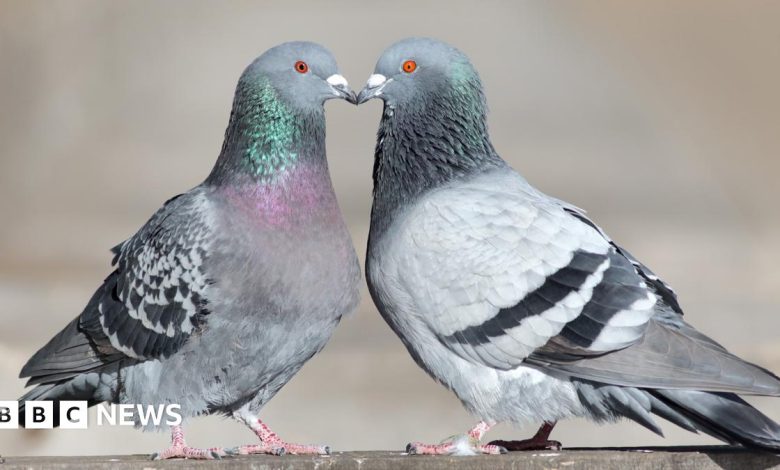
Norwich’s Unique Approach to Pigeon Population Control
In a colorful scene at Norwich’s City Hall, a meeting on Tuesday brought together an unexpected coalition of about 30 pigeon supporters—including one particularly dedicated advocate who arrived wearing a full pigeon mask. The gathering centered around a controversial proposal to introduce contraceptives as a humane method of controlling the city’s pigeon population. Lucy Galvin, who leads the city council’s Green group, emerged as the primary champion of this initiative. She made a compelling case that such a program would be financially feasible and pointed to successful implementations in other cities where similar approaches had effectively managed pigeon numbers without resorting to more severe culling methods. Her advocacy reflected a growing sentiment in Norwich that traditional population control measures might be replaced with more compassionate alternatives that recognize pigeons as part of the urban ecosystem rather than merely as pests to be eliminated.
However, the proposal wasn’t without its skeptics, who raised legitimate ecological concerns about the potential wider impact of introducing contraceptives into the urban environment. Chief among these worries was the possibility that the contraceptive agents might be consumed by non-target bird species, particularly those already facing population challenges or classified as endangered. The contraceptive approach, while seemingly focused on pigeons alone, could potentially become an inadvertent threat to birds with already precarious population numbers. This concern highlighted the complex interconnectedness of urban ecosystems and the need for careful consideration of any human intervention, even those designed with the best intentions to solve a specific problem like pigeon overpopulation. The debate exemplified how urban wildlife management increasingly requires balancing immediate practical concerns with broader ecological preservation goals.
Environmental scientists at the meeting expanded the scope of potential risks, noting that predatory animals who feed on pigeons could inadvertently ingest the contraceptive compounds, creating a ripple effect through the food chain. This possibility of bioaccumulation—where chemicals become more concentrated as they move up the food chain—presented troubling scenarios where birds of prey, feral cats, and other predators might experience unintended reproductive consequences. The discussion demonstrated how urban ecology interventions must be evaluated not just for their direct effects but also for their potential to move through natural systems in unexpected ways. Even as the pigeon enthusiasts advocated for their feathered friends, the council had to weigh these broader ecological considerations against the immediate goal of humanely reducing pigeon numbers.
A further complicating factor emerged from scientific advisors who pointed out that hormone-based contraceptives could potentially be spread into the wider environment through pigeon droppings. With pigeons producing substantial amounts of waste daily throughout the city, there was legitimate concern about these compounds eventually finding their way into soil, water systems, and potentially affecting plant life and aquatic organisms. This pathway of environmental contamination hadn’t been thoroughly studied in urban settings, creating uncertainty about long-term ecological impacts. The discussion highlighted how urban wildlife management decisions increasingly require consideration of complex biochemical interactions that extend far beyond the target species, reflecting a more sophisticated understanding of cities as ecosystems rather than merely human habitats where animals are either tolerated or removed.
The meeting became a microcosm of broader societal debates about human-wildlife coexistence in urban spaces. On one side stood those who viewed pigeons as valuable members of the urban community deserving of humane treatment—symbolized powerfully by the mask-wearing advocate whose silent presence spoke volumes about passionate citizen engagement with wildlife issues. On the other side were pragmatists concerned about building damage, public health, and ecological balance. The pigeon contraceptive proposal thus became more than a simple pest control measure; it transformed into a conversation about values, environmental ethics, and the kind of relationship Norwich residents wanted to have with the wildlife that shares their city spaces. This reflected a growing trend in urban centers worldwide, where traditional pest control approaches are increasingly being reevaluated through ethical and ecological lenses.
As the meeting concluded without a final decision, it left the city of Norwich contemplating fundamental questions about responsibility toward urban wildlife and ecosystem management. The contraceptive proposal, while focused on the humble pigeon, had opened the door to sophisticated discussions about ecological interconnectedness, unintended consequences, and the evolving relationship between humans and wildlife in shared urban spaces. What began as a pragmatic proposal to manage pigeon populations had evolved into a deeper examination of how cities might develop more thoughtful, systemic approaches to urban ecology—ones that respect both human needs and the complex web of life that thrives alongside human development. Norwich’s pigeon debate thus became emblematic of a larger shift occurring in cities worldwide, where urban wildlife management is increasingly viewed through the lens of coexistence rather than conflict, and where even the most common urban birds prompt profound questions about humanity’s role as stewards of shared environments.







f3s8lb