


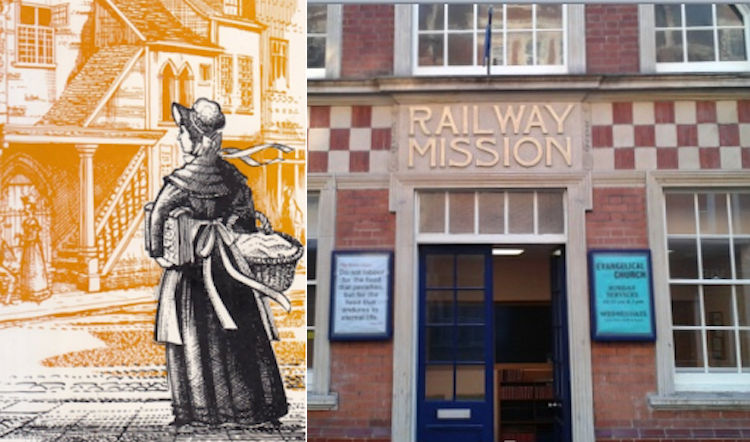
Sarah Martin: Norfolk’s Angel of the Bridewell
In the quaint coastal village of Caister-on-Sea during the early 19th century, a humble dressmaker named Sarah Martin embarked on a remarkable journey that would transform the lives of countless individuals within Norfolk’s impoverished communities. Her story, often referred to as “the story of a useful life,” will be shared through an illustrated presentation by Matthew Pickhaver at Norwich Evangelical Free Church on New Year’s Day 2026. This tale of unwavering compassion and spiritual dedication reveals how a single individual’s commitment to service can ripple through generations, challenging our modern notions of purpose and social responsibility.
Born in 1791 into modest circumstances, Sarah Martin’s life took a profound turn following her conversion to Christianity. Despite her limited means, she dedicated herself to addressing the spiritual and practical needs of society’s most marginalized members. Each day, she would walk miles from her home to Great Yarmouth, where she volunteered tirelessly across multiple institutions. Her work extended to teaching children in Sunday schools, providing care and education in infirmaries and workhouses, and establishing evening classes for young women employed in factories. These efforts alone would constitute a life well-lived, yet Sarah’s most enduring legacy emerged from her decision to enter the forbidding walls of Great Yarmouth’s notorious Bridewell prison.
The Bridewell and later the Tollhouse prison represented the harshest aspects of early Victorian penal institutions – overcrowded, disease-ridden facilities where inmates often departed more hardened than reformed. What distinguished Sarah’s approach was her refusal to see prisoners merely as offenders to be punished. Instead, she recognized their fundamental humanity and potential for transformation. In an era when official prison chaplains were scarce, she filled this spiritual void by offering religious instruction grounded in compassion rather than condemnation. Beyond spiritual guidance, Sarah understood that successful rehabilitation required practical skills. She implemented literacy programs and taught inmates various trades they could pursue upon release, creating pathways toward economic self-sufficiency that might break cycles of crime and poverty.
Perhaps most revolutionary was Sarah’s commitment to what we would now call “aftercare” – maintaining relationships with former prisoners following their release. This holistic approach to rehabilitation acknowledged the immense challenges of reintegration into communities often hostile to those with criminal records. Her methods proved remarkably effective, contributing to measurable improvements in recidivism rates and broader social conditions throughout Yarmouth, where she eventually established her permanent residence. The Tollhouse museum in Great Yarmouth continues to honor her contributions, preserving artifacts and accounts that testify to the profound impact one dedicated individual had on an entire penal system and community.
What makes Sarah Martin’s story particularly compelling is that her extraordinary service emerged from ordinary circumstances. She possessed neither wealth nor social prominence – only an unshakable belief in human dignity and the transformative power of education, compassion, and faith. Her work predated many formal prison reform movements, positioning her as a visionary whose approaches to rehabilitation anticipated developments in criminal justice theory by decades. The challenges she confronted – poverty, educational inequality, and the marginalization of vulnerable populations – remain pressingly relevant today, making her example not merely historically interesting but practically instructive for contemporary social engagement.
For those interested in exploring this inspiring narrative further, Matthew Pickhaver’s presentation at Norwich Evangelical Free Church offers an opportunity to engage with Sarah Martin’s legacy in depth. The talk will take place at 2 PM on January 1st in the former Railway Mission building at 79 Prince of Wales Road. This free event welcomes all community members, regardless of religious affiliation or background. As we consider our own potential contributions to society, Sarah Martin’s legacy invites reflection on how ordinary individuals might address the complex social challenges of our time with similar courage, compassion, and conviction. Her life reminds us that profound social change often begins not with grand institutional initiatives but with the dedicated service of individuals who recognize needs and respond with persistent, principled action.





This topic really needed to be talked about. Thank you.
Your articles always leave me thinking.
Nice read, I just passed this onto a friend who was doing some research on that. And he just bought me lunch since I found it for him smile Thus let me rephrase that: Thanks for lunch! “But O the truth, the truth. The many eyes That look on it The diverse things they see.” by George Meredith.