


Who’s the biggest football club in England? We’ve got the definitive proof at last and have ranked every team from biggest to smallest – now see where YOUR club ranks

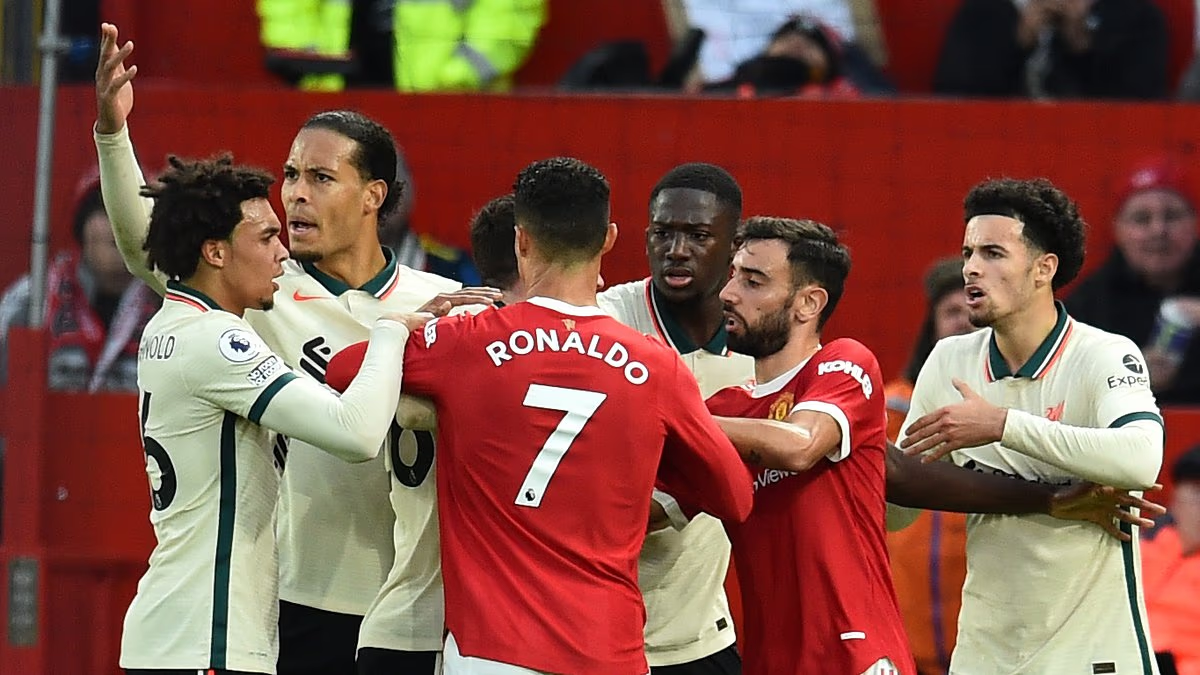
The Beauty Contest of Football Clubs: Who’s the Biggest in England?
Every football fan believes their club stands tallest. It’s human nature – we all think our team has the richest history, the most passionate fans, and the brightest future. As legendary Liverpool manager Bill Shankly once quipped, “Everyone thinks they have the prettiest wife at home.” This tribal loyalty fuels countless heated debates in pubs across England, with supporters defending their club’s honor as if their very identity depends on it. And in many ways, it does. The emotional investment in following a football club through freezing away days, heartbreaking defeats, and overpriced pies demands the comfort of believing your team truly matters in the grand scheme of things.
But beyond the passionate arguments and rivalries, can we determine which English club truly deserves the title of “biggest”? The Daily Mail Sport attempted to settle this age-old debate by taking a scientific approach, analyzing data across seventeen different categories to rank all 92 clubs in England’s top four divisions. Their methodology weighed everything from historic achievements (league titles, European Cups, FA Cups) to modern metrics (social media followers, annual revenue, squad value). They balanced tradition with contemporary relevance, giving higher importance to major trophies while ensuring clubs with passionate fanbases weren’t penalized for current struggles. The formula considered teams’ average attendance over the past decade, all-time average league position, total top-flight seasons, and even the number of England internationals produced by each club throughout their history.
The results crowned Liverpool as England’s biggest club by a considerable margin, with Manchester United coming in second. Liverpool’s dominance across six categories – most league titles (shared with United), best average league position, most top-flight points, most European Cups, most UEFA Cups, and most League Cups – gave them an insurmountable lead. Perhaps more surprisingly, Tottenham Hotspur claimed fourth place despite winning just two league titles, outranking traditional powerhouses like Everton and Aston Villa. This reflects how Spurs’ modern commercial success and consistent presence in the “Big Six” has elevated their status above clubs with richer historical pedigrees. Similarly, West Ham United secured an impressive 11th place without ever winning the league, bolstered by their large London fanbase and recent move to a bigger stadium.
Several fascinating rivalries were settled by the data. Arsenal emerged as London’s premier club, Newcastle edged out Sunderland in the Northeast, Sheffield Wednesday claimed superiority over Sheffield United, and Southampton topped the south coast rankings. The analysis also rewarded clubs whose current league position belies their historical significance – Blackburn Rovers and Derby County both made the top 20 despite recent struggles, while Bolton Wanderers, Huddersfield Town, and Notts County’s historical achievements earned them higher placings than their current status might suggest. At the other end of the spectrum, Harrogate Town finished dead last, with the newest Football League clubs generally occupying the bottom spots. Northampton Town ranked as the lowest club (75th) to have ever competed in the top flight, while 1969 League Cup winners Swindon Town (62nd) were the lowest-ranked team to have lifted a major trophy.
Of course, this ranking represents just one moment in time in the ever-shifting landscape of English football. A century ago, Huddersfield Town dominated the game, winning three consecutive league titles under Herbert Chapman, while Bolton Wanderers were FA Cup specialists. Bury – a club that no longer exists in professional football – were a top-flight force, and Watford suffered humiliating defeats against teams now forgotten by all but the most dedicated historians. The beautiful game’s unpredictable nature means today’s giants could be tomorrow’s strugglers, and vice versa. Manchester City’s transformation from mid-table mediocrity to global powerhouse demonstrates how dramatically fortunes can change, while Bury’s expulsion from the Football League shows that even historic clubs aren’t guaranteed survival.
Perhaps what makes football so compelling is precisely this tension between past and present, between tradition and transformation. The data may crown Liverpool as England’s biggest club today, but the beauty of the sport lies in its constant evolution. New rivalries emerge, old powerhouses reinvent themselves, and unexpected challengers rise from obscurity. The tribal allegiances that make fans defend their club’s honor with such passion don’t disappear when confronted with objective rankings – if anything, they intensify. Because at its heart, supporting a football club isn’t about rational assessment of trophies won or revenues generated. It’s about belonging to something larger than yourself, connecting to a community across generations, and finding meaning in the shared emotional journey of triumph and heartbreak. So while this comprehensive analysis offers fascinating insight into England’s football hierarchy, the debate about which club is truly “biggest” will rage on in pubs and living rooms across the country – exactly as it should.





I’m really enjoying the theme/design of your blog. Do
you ever run into any internet browser compatibility problems?
A couple of my blog visitors have complained about my
site not operating correctly in Explorer but looks great in Chrome.
Do you have any advice to help fix this problem?
I enjoy the efforts you have put in this, regards for all the great articles.
**mitolyn reviews**
Mitolyn is a carefully developed, plant-based formula created to help support metabolic efficiency and encourage healthy, lasting weight management.
Whats up very cool web site!! Man .. Beautiful .. Superb .. I will bookmark your site and take the feeds also…I am satisfied to find so many helpful info right here in the put up, we need work out extra strategies in this regard, thanks for sharing. . . . . .
I’m not sure exactly why but this blog is loading incredibly slow for me. Is anyone else having this issue or is it a issue on my end? I’ll check back later on and see if the problem still exists.