


Revitalizing Norwich’s Former Debenhams: A Balancing Act of Heritage, Housing, and Sustainability
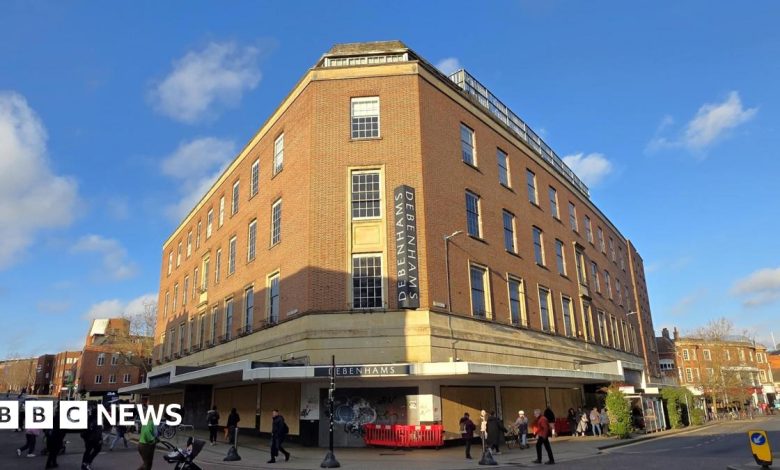
The former Debenhams building in Norwich has become a focal point of urban development debate, with conflicting visions for its future creating tension between preservation advocates, environmental activists, and those eager for economic revitalization. Save Britain’s Heritage has championed the existing structure as a “handsome” architectural asset, warning that demolition would significantly damage the character of the city’s conservation area. Their perspective emphasizes the building’s historical significance and contribution to Norwich’s distinctive urban landscape, suggesting that modern development should incorporate rather than replace such heritage elements that give the city its unique identity and sense of place.
The proposal to convert the vacant department store into student accommodation has encountered resistance based on market saturation concerns. Norwich City Council has already acknowledged this issue by implementing restrictions on future student housing developments, reflecting broader questions about urban planning priorities and the balance between catering to the transient student population versus addressing the housing needs of permanent residents. This tension highlights the challenges faced by many British cities with significant student populations, where development often follows educational institution growth rather than community-driven housing demands, leaving long-term residents feeling marginalized in planning decisions affecting their neighborhoods.
Green councillor Martin Schmierer has articulated an alternative vision that prioritizes environmental responsibility and social inclusivity, advocating for the building’s adaptation into affordable housing with communal spaces accessible to the wider community. His approach emphasizes the urgent environmental imperative to reuse existing structures rather than demolish them, pointing to the substantial carbon footprint of demolition and rebuilding. This position reflects growing awareness that the embodied carbon in existing buildings represents a significant environmental investment that is squandered through demolition, challenging developers to embrace more creative approaches to architectural revival that honor both heritage and sustainability commitments.
The environmental concerns extend beyond local heritage preservation, connecting the Norwich development decision to global climate challenges. Schmierer’s characterization of demolition as “simply unjustifiable” in the context of our “environmental and ecological crisis” frames the debate as not merely about aesthetics or economics, but about fundamental values and responsibilities toward future generations. This perspective asks citizens and planners to consider whether short-term convenience and contemporary design preferences should outweigh long-term sustainability goals, particularly when existing structures could be imaginatively repurposed rather than replaced, avoiding tons of construction waste and new material production.
Labour deputy council leader Carli Harper presents a contrasting viewpoint, describing the vacant property as an “eyesore” and expressing optimism about renewed activity at the site. Her pragmatic stance acknowledges the negative impact of prominent vacant buildings on urban vitality and economic confidence, suggesting that revitalization—even through substantial redevelopment—may better serve community interests than preservation of an unused structure. This position reflects the practical challenges faced by local governments in balancing multiple competing priorities: historical preservation, environmental sustainability, housing needs, and economic development, all while working within complex planning frameworks and responding to community pressure from various stakeholder groups.
Harper’s assurance that the Debenhams development proposal had been anticipated within the council’s student accommodation policy reveals the nuanced planning considerations that shape urban development decisions. This recognition of the need for policy flexibility demonstrates how city governments must navigate between principled restrictions and case-by-case evaluations of development opportunities. The Debenhams site controversy ultimately encapsulates the fundamental tensions in contemporary urban planning: how to honor architectural heritage while meeting modern needs; how to balance environmental responsibility with economic growth; and how to create inclusive spaces that serve diverse community interests rather than narrow commercial objectives. As Norwich weighs these competing visions, its decision will reflect not just local preferences but broader societal values regarding sustainability, heritage, and community development in the 21st century.






You’ve done a great job with this. I ended up learning something new without even realizing it—very smooth writing!
You always deliver high-quality information. Thanks again!
Great blog here! Additionally your website rather a lot up fast! What web host are you using? Can I am getting your affiliate link for your host? I wish my web site loaded up as fast as yours lol
wow bro appreciate you sharing this blog post. link gacor Thanks Again. Cool bro nicee amazing
Służysz społeczności blogowej, pięknie przy tym składasz frazy, przyjmij najszczersze wdzięczności moich wyrazy 🙂