


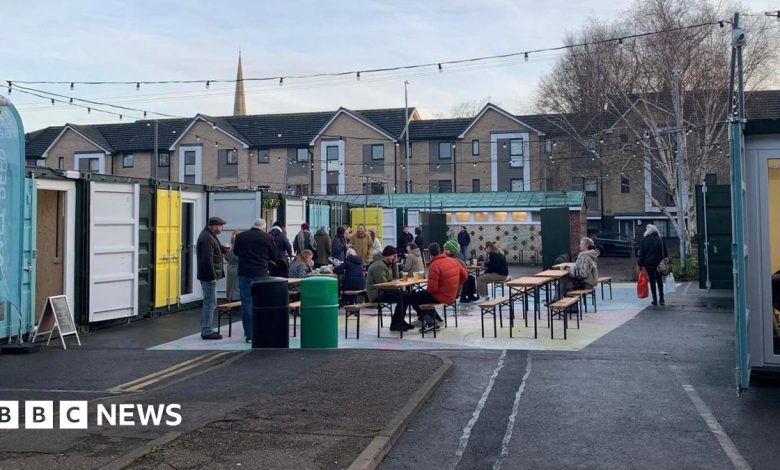
Norwich Container Park: A New Chapter for Local Businesses
In the heart of Norwich, an innovative container park has emerged, offering a lifeline to small businesses seeking physical retail space. This development has sparked both excitement and concerns among local entrepreneurs, highlighting the delicate balance between fostering new business opportunities and maintaining the health of established commercial areas.
Kiera Morel, the passionate owner of Crafty Llama, views the container park as her gateway from online-only retail to a brick-and-mortar presence. Her knitting and crochet business represents exactly the type of small enterprise the container concept was designed to nurture. “These are really affordable spaces that I think give small businesses a chance that we wouldn’t otherwise get,” Morel explains with evident enthusiasm. Her sentiment captures the essential appeal of these container shops—they lower the barrier to entry for entrepreneurs who might find traditional retail locations financially out of reach, particularly in a challenging economic climate.
The container park has also attracted established local traders looking to expand their footprint. Toby Westgarth, proprietor of the popular Sir Toby’s Beers stall on Norwich Market, sees the development as complementary rather than competitive to the city’s traditional shopping districts. “There’s a good bit of distance between the two, so I would like to think the two can coexist,” he observes optimistically. This perspective suggests the potential for the container park to enhance Norwich’s overall retail ecosystem, creating a distinctive shopping destination that adds character to the city rather than cannibalizing existing trade.
However, not all local business owners share this positive outlook. Along Magdalen Street, where established shops have long served the community, concerns about the new development are more pronounced. Stuart Willimott of Carmichaels Darts and Trophies voices practical worries about the impact on local infrastructure: the market is “a good idea if it was elsewhere and it didn’t take up all the car parking spaces needed down here.” His concern highlights how even well-intentioned urban developments can create unintended consequences for existing businesses, particularly when they affect critical resources like parking that shoppers rely on to access traditional retail areas.
Albert Hawes, who runs the Now-N-Then antiques shop, offers a nuanced perspective that acknowledges both the opportunity and the implementation challenges. While he expresses optimism about the potential for increased foot traffic in the area, saying “I really do hope it works out – I’m quite excited to have more people down here,” he also critiques the execution. Hawes suggests the container park would have benefited from “a proper launch day” when more businesses were ready to open, complete with entertainment to create buzz and momentum. His comments reveal the importance of thoughtful planning and community engagement when introducing new retail concepts to established commercial areas.
The Norwich container park represents a microcosm of the evolving retail landscape in towns and cities across the country. As consumers increasingly split their shopping between online and physical stores, innovative retail spaces like container parks offer a middle ground—providing the tangible shopping experience many customers still crave, while giving small businesses a more accessible entry point to physical retail. The mixed reactions from Norwich’s business community illustrate the complex challenges of urban development: balancing innovation with tradition, creating opportunities without displacing existing enterprises, and ensuring that new ventures enhance rather than detract from the commercial fabric of the city. As the container park establishes itself in Norwich’s retail ecosystem, its success will ultimately depend on finding this delicate balance, creating a space that complements rather than competes with the city’s traditional shopping areas.



This content is really helpful, especially for beginners like me.
Amazing! This blog looks just like my old one! It’s on a entirely different topic but it has pretty much the same page layout and design. Outstanding choice of colors!
I will immediately clutch your rss feed as I can not in finding your e-mail subscription hyperlink or e-newsletter service. Do you have any? Kindly allow me recognise so that I may subscribe. Thanks.
An %BT% topic matter continues of all head now. What can it just mean that? Effortlessly need to have to detailed description them during blog i am going to find assist you?
Very energetic blog, I liked that bit. Will there be a part 2?
Loving the info on this web site, you have done outstanding job on the articles.
It’s very simple to find out any matter on net as compared to books, as I found this paragraph at this site.
Ahaa, its good dialogue about this piece of writing here at this weblog, I have read all that, so now me also commenting here.
Hello Dear, are you truly visiting this web page daily, if so then you will definitely obtain pleasant knowledge.
I always spent my half an hour to read this web site’s articles daily along with a cup of coffee.
Hi there, I read your blog regularly. Your humoristic style is awesome, keep doing what you’re doing!
**mitolyn official**
Mitolyn is a carefully developed, plant-based formula created to help support metabolic efficiency and encourage healthy, lasting weight management.
Hi, just wanted to mention, I enjoyed this post. It was helpful. Keep on posting!
I am sure this post has touched all the internet people, its really really good paragraph on building up new weblog.
I am sure this article has touched all the internet viewers, its really really nice post on building up new webpage.
I visited several web pages however the audio quality for audio songs current at this website is really superb.
Ahaa, its fastidious dialogue about this piece of writing at this place at this blog, I have read all that, so at this time me also commenting at this place.
Hello, I read your new stuff daily. Your writing style is awesome, keep up the good work!
I’ll right away grasp your rss as I can’t to find your e-mail subscription link or newsletter service. Do you have any? Kindly permit me understand so that I may subscribe. Thanks.
I will right away take hold of your rss feed as I can not find your email subscription link or e-newsletter service. Do you’ve any? Please permit me know so that I may just subscribe. Thanks.
I like what you guys are up too. This kind of clever work and exposure! Keep up the great works guys I’ve added you guys to my own blogroll.
Ahaa, its nice dialogue on the topic of this piece of writing at this place at this blog, I have read all that, so now me also commenting here.
I just could not depart your site prior to suggesting that I extremely enjoyed the usual info an individual supply in your visitors? Is going to be again frequently in order to check up on new posts
San Francisco was painfully thin on the outside before Crabtree returned.